Mannerism
Historical context
Mannerism developed in Italy around 1520, after the achievements of the High Renaissance. Artists such as Leonardo da Vinci, Michelangelo, and Raphael had established ideals of harmony, balance, proportion, and ideal beauty. The younger generation mastered these achievements but began to explore new ways of creating art.
Instead of continuing the balanced compositions of the High Renaissance, Mannerist artists experimented with unusual poses, elongated bodies, crowded compositions, and unexpected arrangements of figures. Their art often appears artificial, restless, or deliberately difficult to understand.
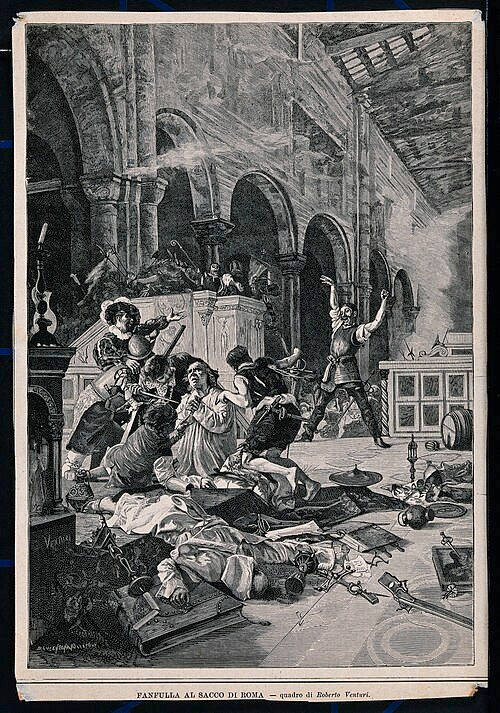
The period was also marked by political and social instability. The plague of 1522 and the Sack of Rome by imperial troops in 1527 disrupted artistic life and encouraged artists to move to other European courts. Mannerism consequently spread beyond Italy and became an international style.
The word Mannerism comes from the Italian word maniera, meaning “style” or “manner.” It originally referred to artists who developed a sophisticated, highly individual style based on the achievements of earlier Renaissance masters.
the Sack of Rome
Painting
Mannerist painters moved away from the harmony and naturalistic space of the High Renaissance. They experimented with elongated figures, unusual poses, crowded compositions, and unexpected arrangements. Their paintings often appear artificial, restless, or emotionally intense.
Early Mannerism
Rosso Fiorentino was one of the most unconventional early Mannerist painters. His Deposition from the Cross (1521) presents figures in a restless, complicated composition. Their sharp movements, unusual proportions, and dramatic atmosphere contrast with the harmony of High Renaissance painting.
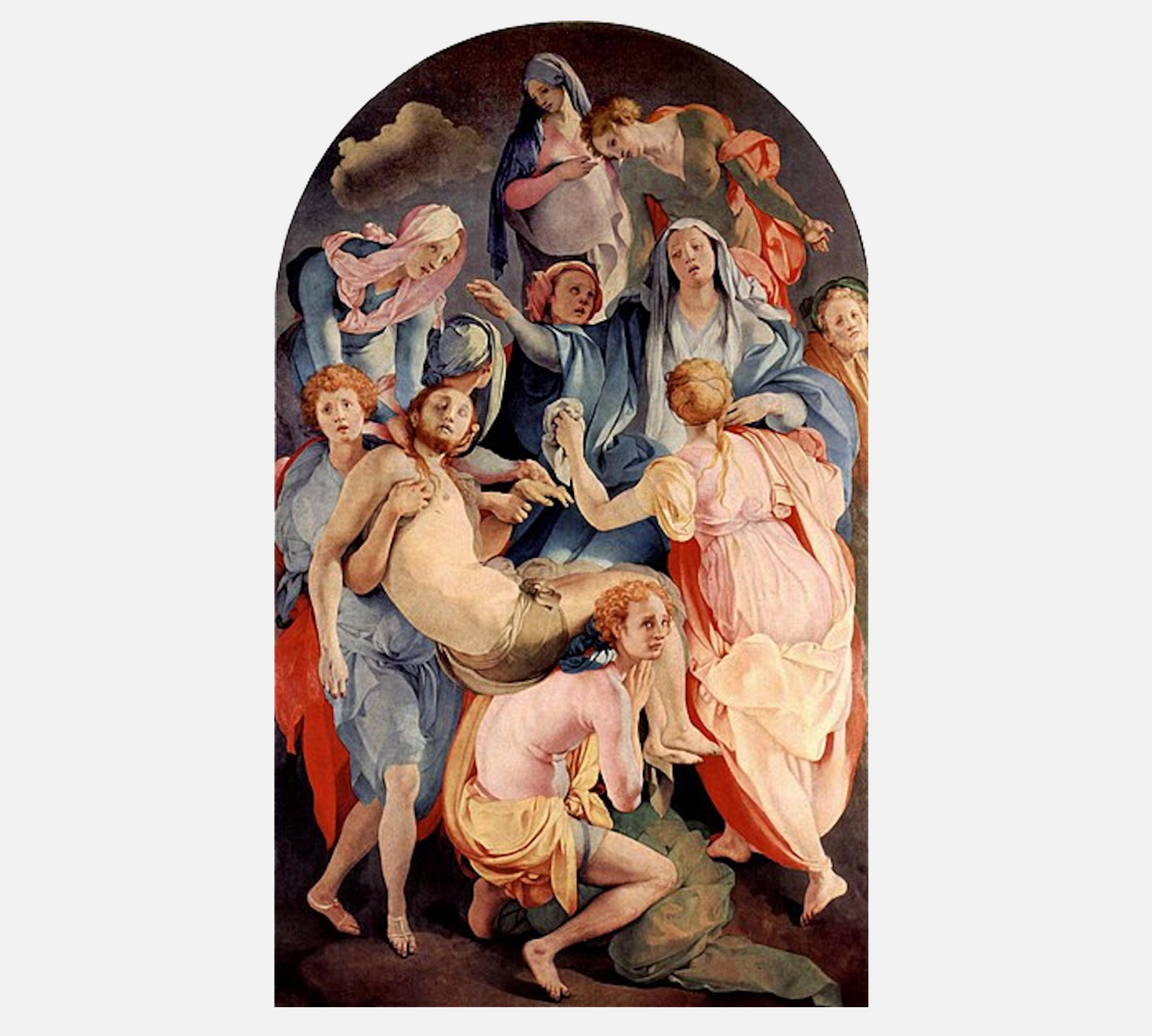
Pontormo was another important early Mannerist painter. His Deposition from the Cross (c. 1526–1528) contains elongated figures and compressed space, making the scene feel unusual and emotionally intense. Instead of presenting a clear, stable setting, Pontormo creates an atmosphere of spiritual tension.
High Mannerism
Later Mannerism developed a more refined and elegant style. Artists emphasised sophistication, complex compositions, and artistic invention. Figures could be elongated and graceful, creating an effect that often seemed artificial rather than natural.
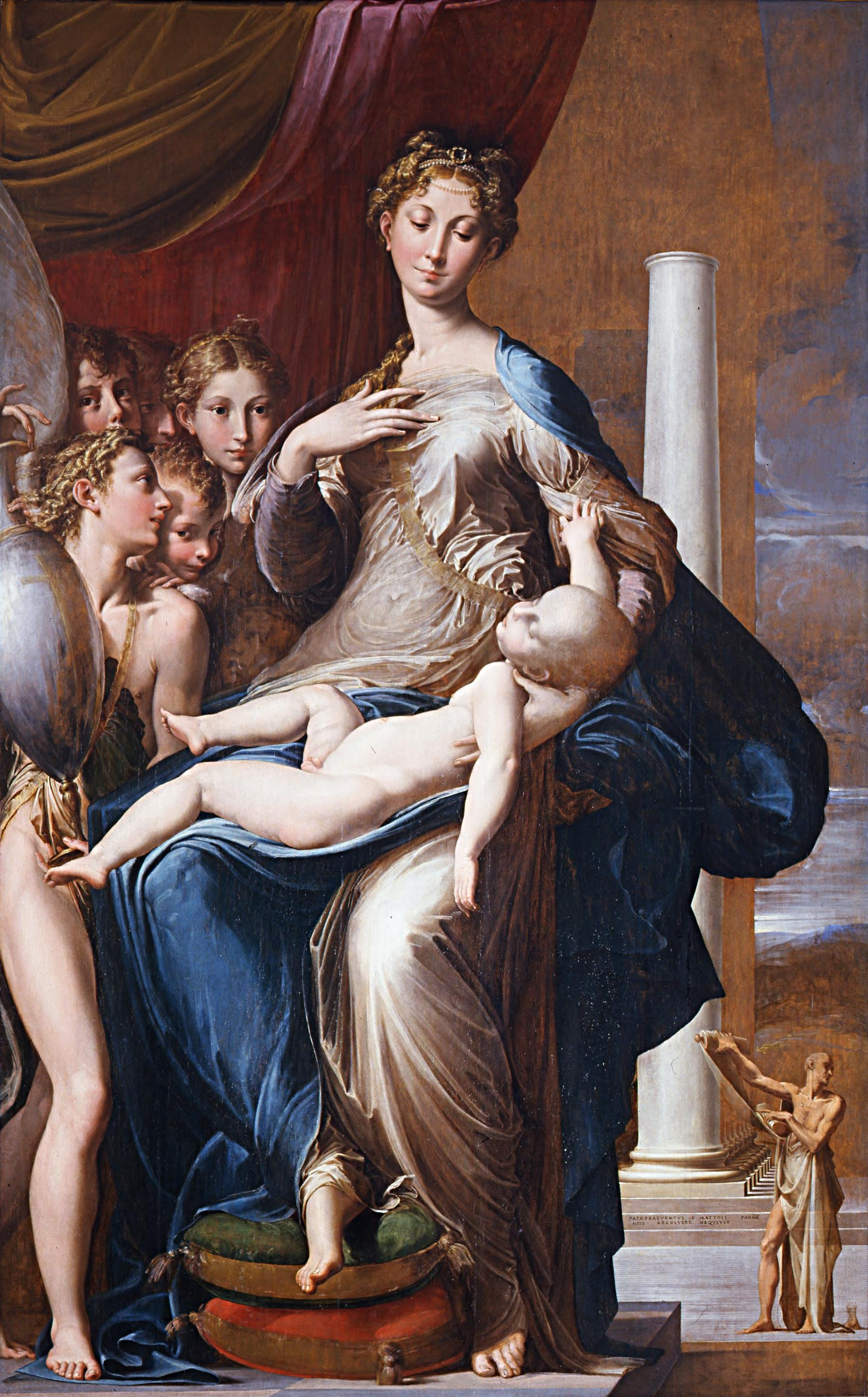
Parmigianino was an important representative of this refined style. His paintings demonstrate an interest in elegant forms, elongated proportions, and carefully controlled compositions.
Mannerism in Venice
Mannerism also developed in Venice, where artists explored the expressive possibilities of colour and light.
Jacopo Tintoretto combined dramatic compositions with energetic brushwork, strong contrasts of light and shadow, and unusual spatial arrangements. His painting Christ before Pilate (1566–1567) creates a dramatic and unsettling scene through its composition, lighting, and expressive figures.
El Greco (1541–1614)
El Greco, born on Crete, became one of the best-known Mannerist painters. He was influenced by Byzantine artistic traditions, Venetian painting, and Italian Renaissance masters. He eventually settled in Spain.
His paintings often contain elongated figures, intense colours, dramatic lighting, and an emphasis on spiritual experience rather than ordinary physical reality.
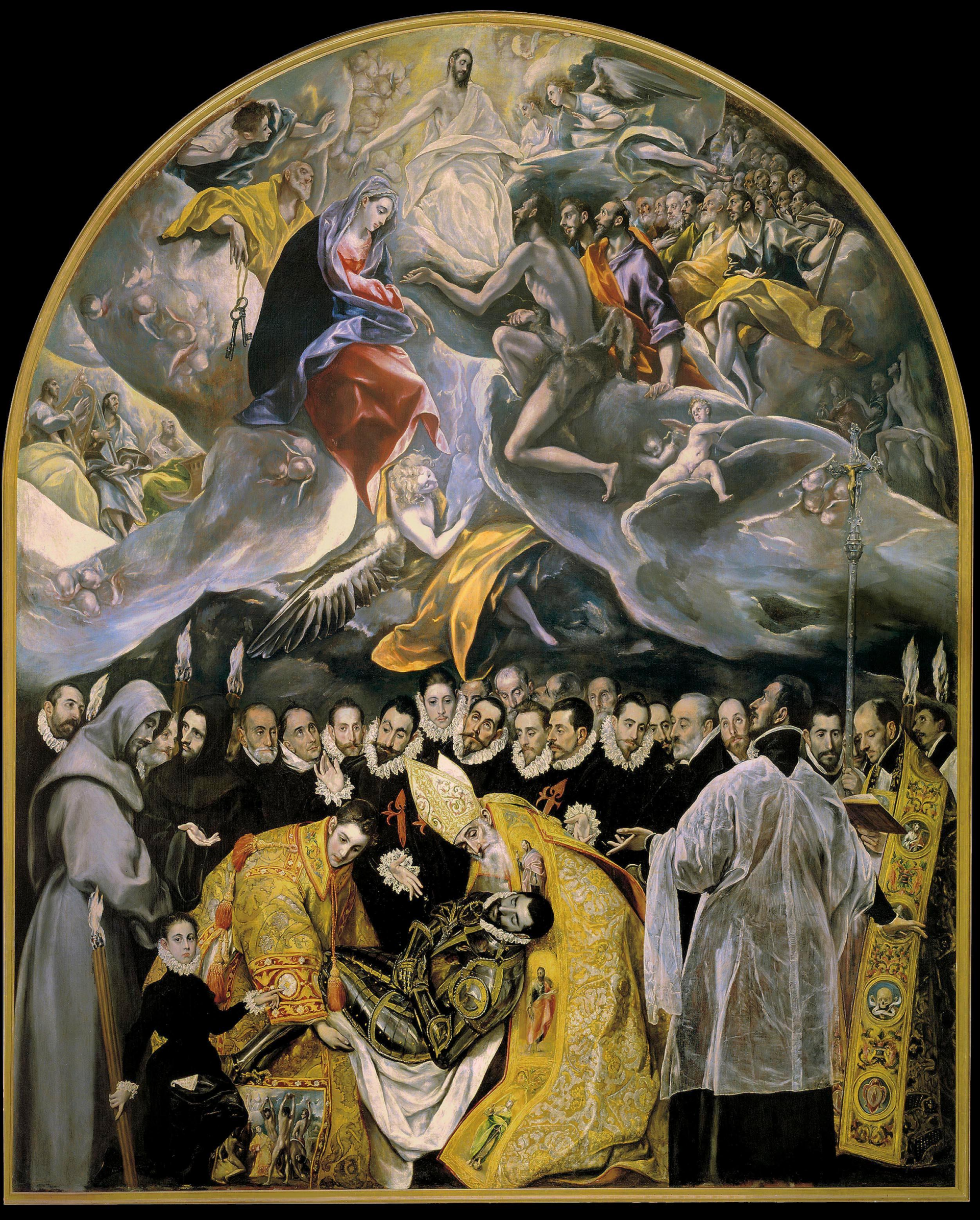
His masterpiece, The Burial of Count Orgaz (1586), depicts a miraculous burial alongside a vision of the heavenly world. The lower part of the painting shows the burial on Earth, while the upper part presents a supernatural vision. El Greco combines a realistic portrayal of contemporary people with an intensely spiritual and visionary atmosphere.
Sculpture
Sixteenth-century sculptors explored new forms of expression, elegance, and technical skill. Some adopted the elongated figures and unusual proportions associated with Mannerism, while others focused on refined details and sophisticated decorative effects.
Benvenuto Cellini (1500–1571)
Benvenuto Cellini was an Italian goldsmith and sculptor famous for his technical virtuosity and refined decorative objects.
His Salt Cellar (1540–1543), made for the French king Francis I, combines precious materials with elegant figures and elaborate ornament. The object demonstrates how Mannerist artists could transform even a practical object into a sophisticated work of art.
Architecture
Mannerist architecture challenged the clear proportions, balance, and harmony associated with High Renaissance architecture. Architects experimented with unusual relationships between structural elements and unexpected decorative details, creating deliberately complex compositions.
Michelangelo: Laurentian Library
Michelangelo’s Laurentian Library in Florence is an important example of Mannerist architecture. Its vestibule and staircase use architectural elements in unusual ways, creating a sense of tension rather than the simple classical harmony typical of the High Renaissance.
Bartolomeo Ammannati: Courtyard of the Pitti Palace
Bartolomeo Ammannati’s courtyard of the Pitti Palace in Florence features heavy rusticated surfaces and unusual architectural elements. These features give the architecture a more expressive and decorative character rather than following straightforward classical design.
Main Characteristics of Mannerist Architecture
Mannerist architects did not simply copy the buildings of ancient Rome. Instead, they adapted, rearranged, and transformed Renaissance architectural forms, experimenting with proportions, decoration, and the relationships between different elements.
Key terms
Mannerism: An artistic movement that developed around 1520, transforming High Renaissance ideals through stylisation, unusual proportions, and complex compositions.
Maniera: An Italian word meaning “style” or “manner.” It is the origin of the term Mannerism.
Elongation: The deliberate lengthening of figures or body parts beyond natural proportions.
Stylisation: The transformation of natural forms according to an artistic style rather than representing them exactly as they appear in reality.
Composition: The arrangement of figures, objects, shapes, and spaces within an artwork.
Sfumato: A painting technique that creates soft transitions between colours and tones without sharp outlines. It is especially associated with Leonardo da Vinci and later painting.
Knowledge check: Mannerism
Test your understanding of the lesson. Click on each question to reveal the correct answer and explanatory notes.
Create Your Own Website With Webador