Ancient Greek art: From ideal harmony to dramatic emotion
Ancient Greek civilisation developed around the Aegean Sea and expanded throughout the Mediterranean. Greek communities were organised into independent city-states, known as poleis, such as Athens and Sparta. Although these city-states often competed with one another, they shared a language, religious traditions, myths, and many artistic ideas. Greek art developed over several centuries. Artists gradually changed the way they represented the human body, moving from relatively rigid figures towards more naturalistic representations of movement, anatomy, and emotion.
For studying Greek art, it is useful to distinguish four main periods:
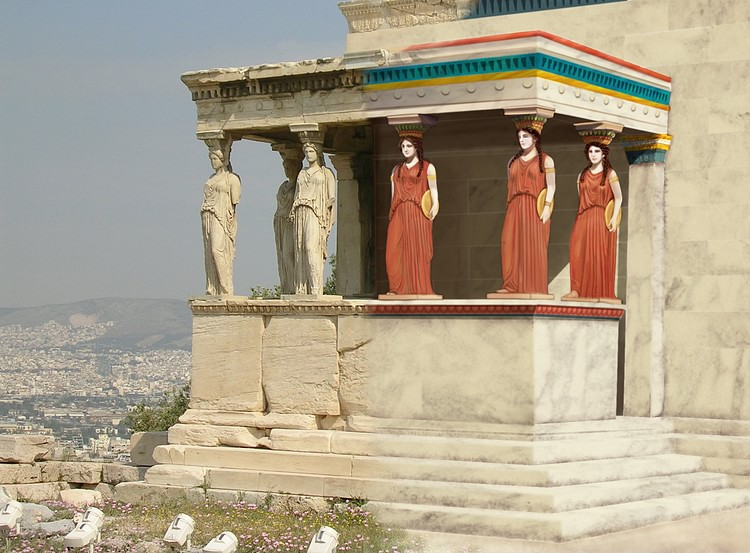
Geometric period
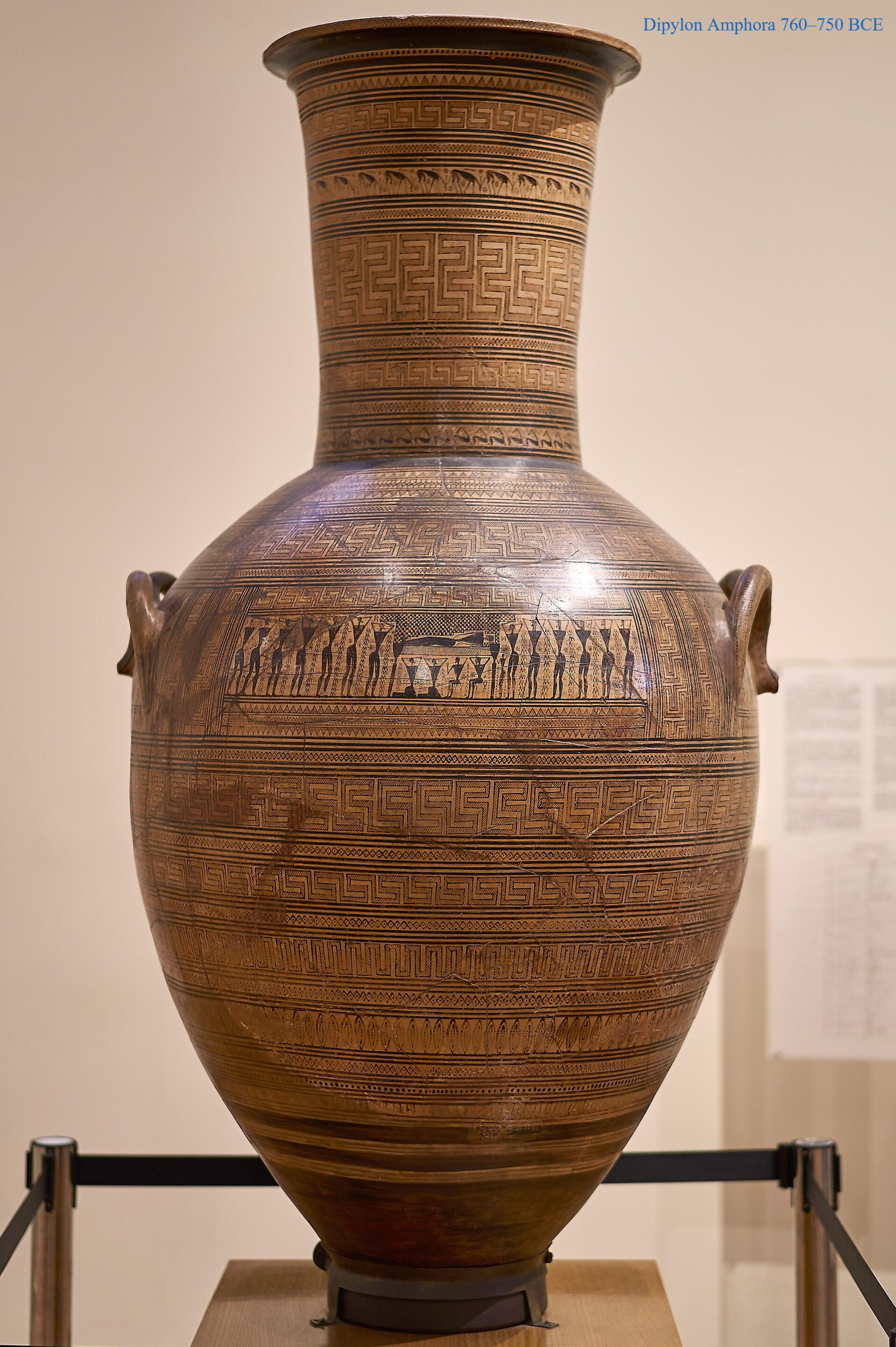
Emerging after the Greek Dark Ages, this era centered on repeating meander motifs and abstract silhouettes on funerary vessels. These stylized vessels marked the revival of Greek monumental craft.
Archaic art
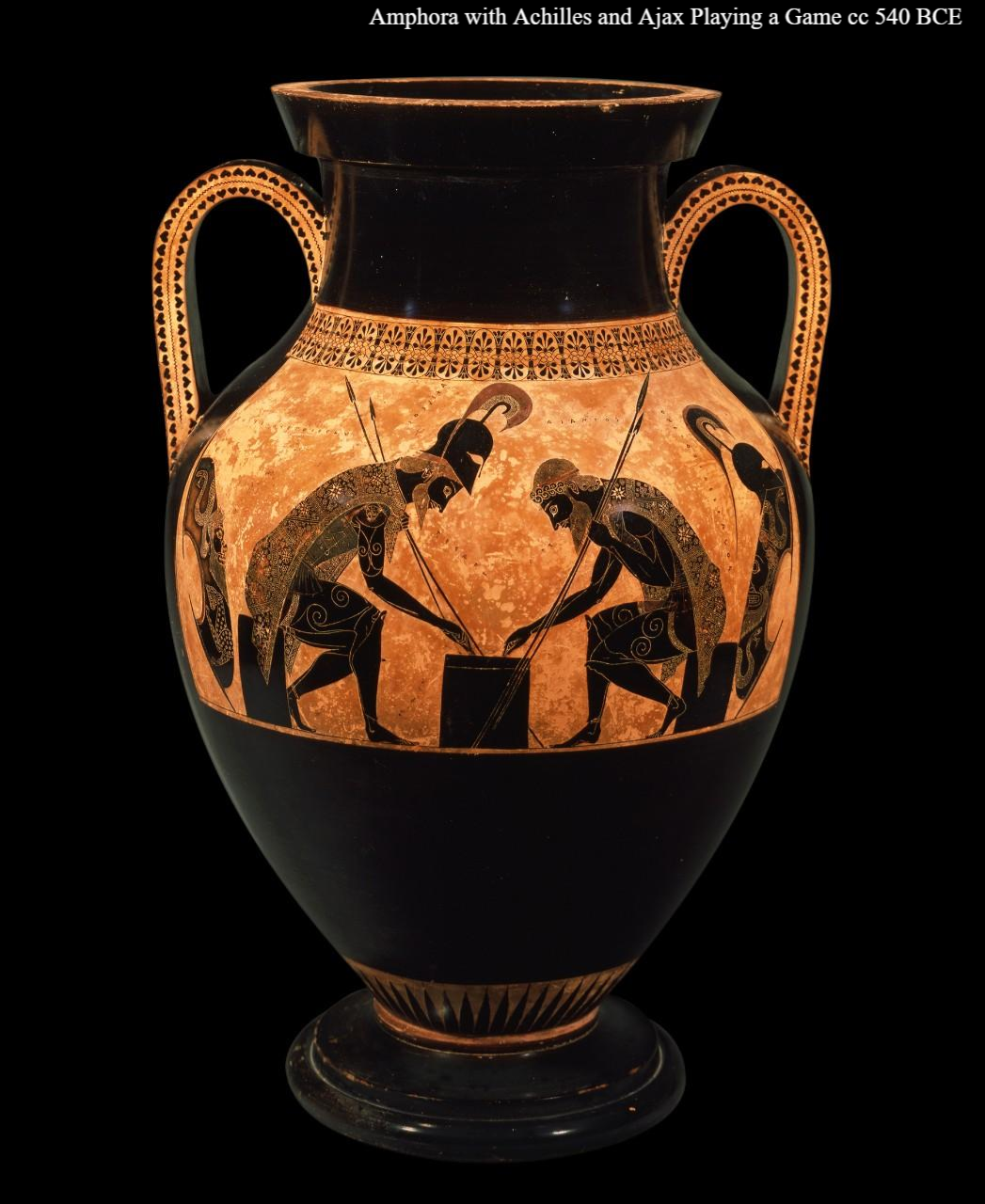
Known for early monumental sculpture such as rigid kouros and kore statues with characteristic stylized smiles. Artists also pioneered early stone temple architecture and sophisticated black-figure pottery.
Classical art
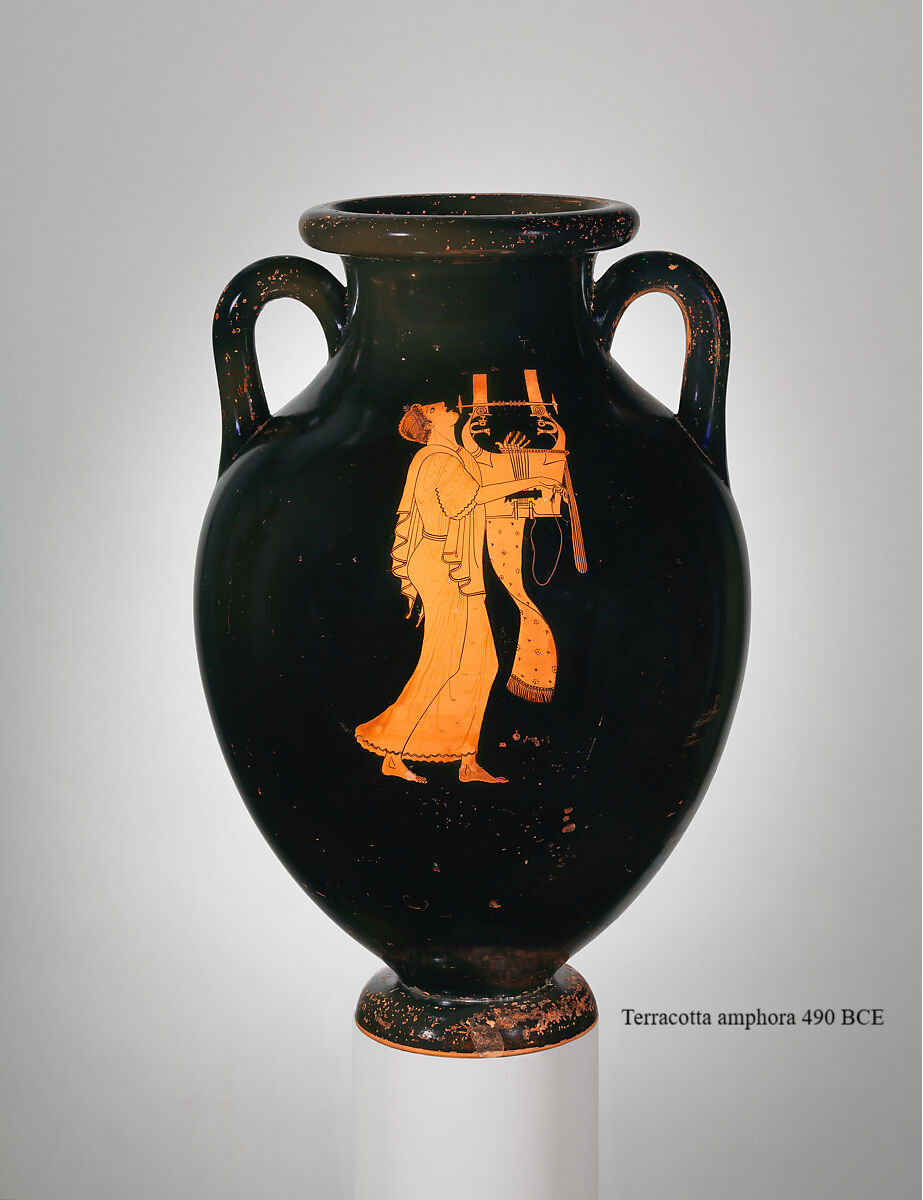
Defined by balanced proportions, naturalistic anatomical poses, and the revolutionary weight shift of contrapposto. Celebrated masterworks include the sculpted architectural friezes of the Athenian Parthenon.
Hellenistic art
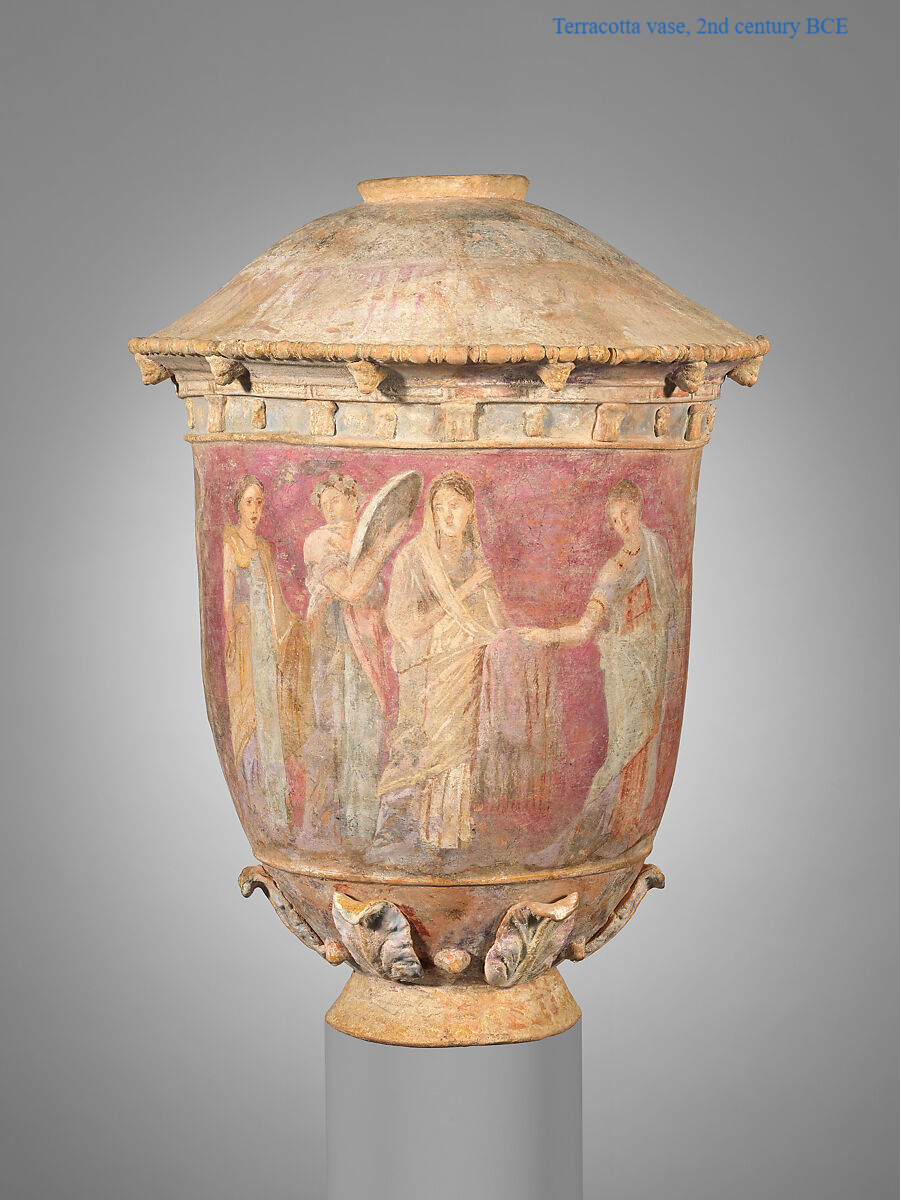
This expressive phase introduced dramatic physical movement, theatrical emotion, and ambitious multi-figure compositions. Sculptors departed from classical restraint to portray human drama and turmoil.
The Geometric period
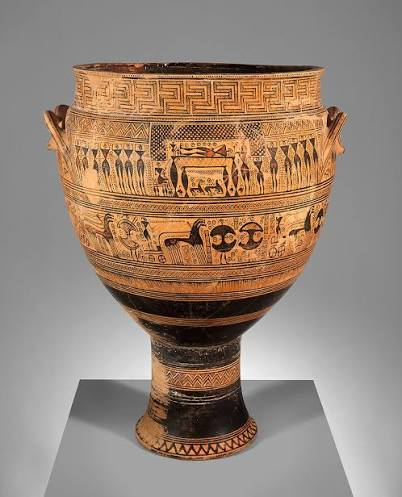
The Geometric Period (approximately 900–700 BCE) was an important stage in the development of Greek art. Artists decorated pottery with geometric patterns, including straight lines, zigzags, triangles, circles, and meanders. These patterns were often arranged in horizontal bands around the vessel.
Later in the period, artists began to include human and animal figures. Human figures were highly simplified, with small heads, triangular torsos, and angular limbs. Scenes of funerals, processions, and warriors sometimes appeared on large vessels used as grave markers.
One important example is the Dipylon Amphora, an enormous funerary vase found in Athens. Its decoration includes geometric patterns and a scene associated with a funeral. The figures are stylised rather than naturalistic, showing that artists were more concerned with clear outlines and organised patterns than with realistic anatomy.
The Geometric Period is important because it established distinctive Greek decorative traditions and prepared the way for the development of more complex figural art during the Orientalising and Archaic periods.
The Archaic period: Form, order, and early ceramics
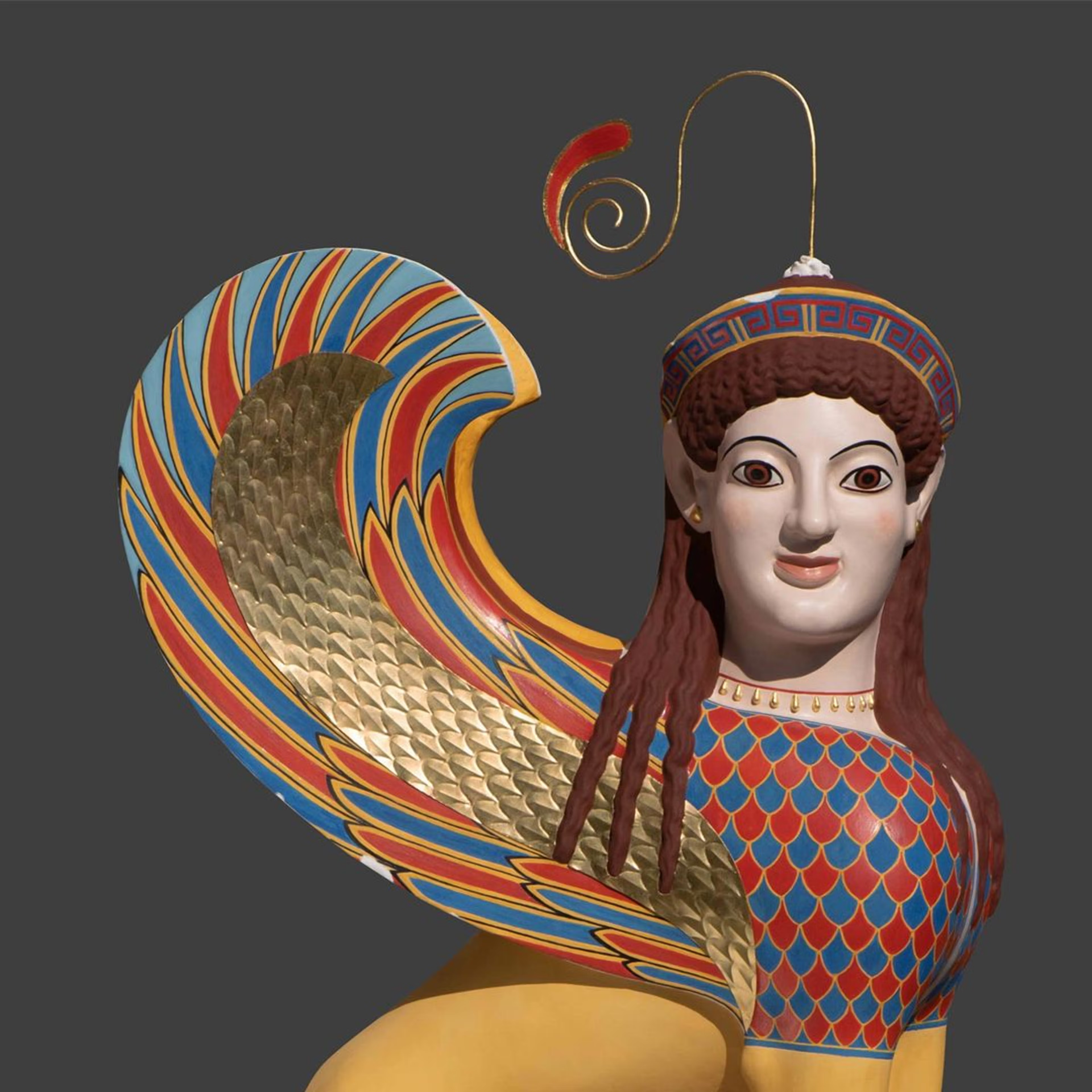
Archaic Greek art developed between approximately 700 and 480 BCE. During this period, Greek artists came into contact with cultures around the Mediterranean and the Ancient Near East, while gradually developing their own artistic traditions.
Sculpture: Kouros and Kore
Two common types of Archaic Greek sculpture were the kouros and the kore.
-
Kouros: A statue of a nude young man, usually standing upright and facing forward. One foot is often placed slightly ahead of the other, while the arms remain close to the body. The figure is symmetrical and relatively rigid.
-
Kore: A statue of a clothed young woman, often shown holding an offering.
Both types of sculpture have formal poses and carefully arranged features. Many Archaic statues also have a slight smile, known as the Archaic smile.
Greek Temples and Column Orders
Greek temples were built to honour the gods and often housed a statue of the deity. Religious ceremonies frequently took place outside the temple.
Greek architecture developed three main column orders:
-
Doric: The simplest and most solid-looking order, with columns that usually have no bases.
-
Ionic: Recognisable by the scroll-shaped decorations, called volutes, on the capitals.
-
Corinthian: Distinguished by capitals decorated with acanthus leaves.
Greek Vase Painting
Pottery was used for storing liquids, serving food, and mixing wine with water. Greek vases were also decorated with scenes from mythology, religious ceremonies, athletics, and everyday life.
Two important techniques were used in Greek vase painting:
-
Black-figure pottery: Figures were painted in black against the reddish colour of the clay. Details were often added by incising lines into the black surface.
-
Red-figure pottery: Figures remained the reddish colour of the clay, while the background was painted black. This technique made it easier for artists to add fine details and represent the human body.
Archaic Greek art established important traditions in sculpture, architecture, and vase painting that influenced later Greek art.

The Classical period: Balance, proportion, and contrapposto
The Classical Period, approximately 480–323 BCE, is often associated with ideals of proportion, balance, harmony, and idealised beauty. Greek artists studied the human body carefully and aimed to represent its anatomy and movement convincingly.
Sculpture: Proportion and Contrapposto
Classical Greek sculptors created figures that appear more natural and relaxed than many Archaic statues. They paid close attention to anatomy, body proportions, and the relationship between different parts of the body.
Contrapposto is a pose in which the body's weight rests mainly on one leg. The hips and shoulders respond to this shift, creating a more natural and relaxed stance.
The Kritios Boy, dating to around 480 BCE, is an early example of this development. Its posture suggests a shift away from the rigid symmetry of Archaic sculpture.
The Doryphoros, or Spear Bearer, associated with the sculptor Polykleitos and dating to the fifth century BCE, became an important example of ideal body proportions and balanced composition. Many surviving Greek sculptures are Roman copies of lost Greek originals.
Architecture and the Parthenon
The Parthenon, built on the Acropolis in Athens between 447 and 432 BCE, was dedicated to Athena, the city's patron goddess.
The temple follows the Doric order but also incorporates Ionic features. Its architecture and sculptural decoration were designed as parts of a unified whole.
Its sculptural programme included:
-
Pedimental sculptures, which decorated the triangular spaces at the ends of the roof.
-
Metopes, individual panels depicting mythological subjects.
-
A continuous frieze, showing ceremonial and other scenes connected with Athenian identity and religious life.
The Parthenon is associated with the artistic programme of the statesman Pericles and the sculptor Phidias. It demonstrates how architecture and sculpture could express religious beliefs and civic identity.
The Classical Ideal
Classical Greek art sought to combine careful observation of the human body with ideals of proportion, balance, and beauty. Rather than simply copying individual appearances, artists often presented the human figure as an ideal form.
These principles influenced Greek sculpture and architecture and continued to shape artistic traditions long after the Classical Period.
The Hellenistic period: Passion, movement
The Hellenistic Period began after the death of Alexander the Great in 323 BCE and lasted until the Roman conquest of Egypt in 30 BCE. During this period, Greek language and culture spread across a much wider area, and important centres of art developed beyond mainland Greece.
Hellenistic artists explored a broader range of subjects and aimed to express dramatic movement, strong emotions, and individual character. Sculptures depicted not only idealised young figures but also old age, childhood, and people from different social backgrounds.
Nike of Samothrace
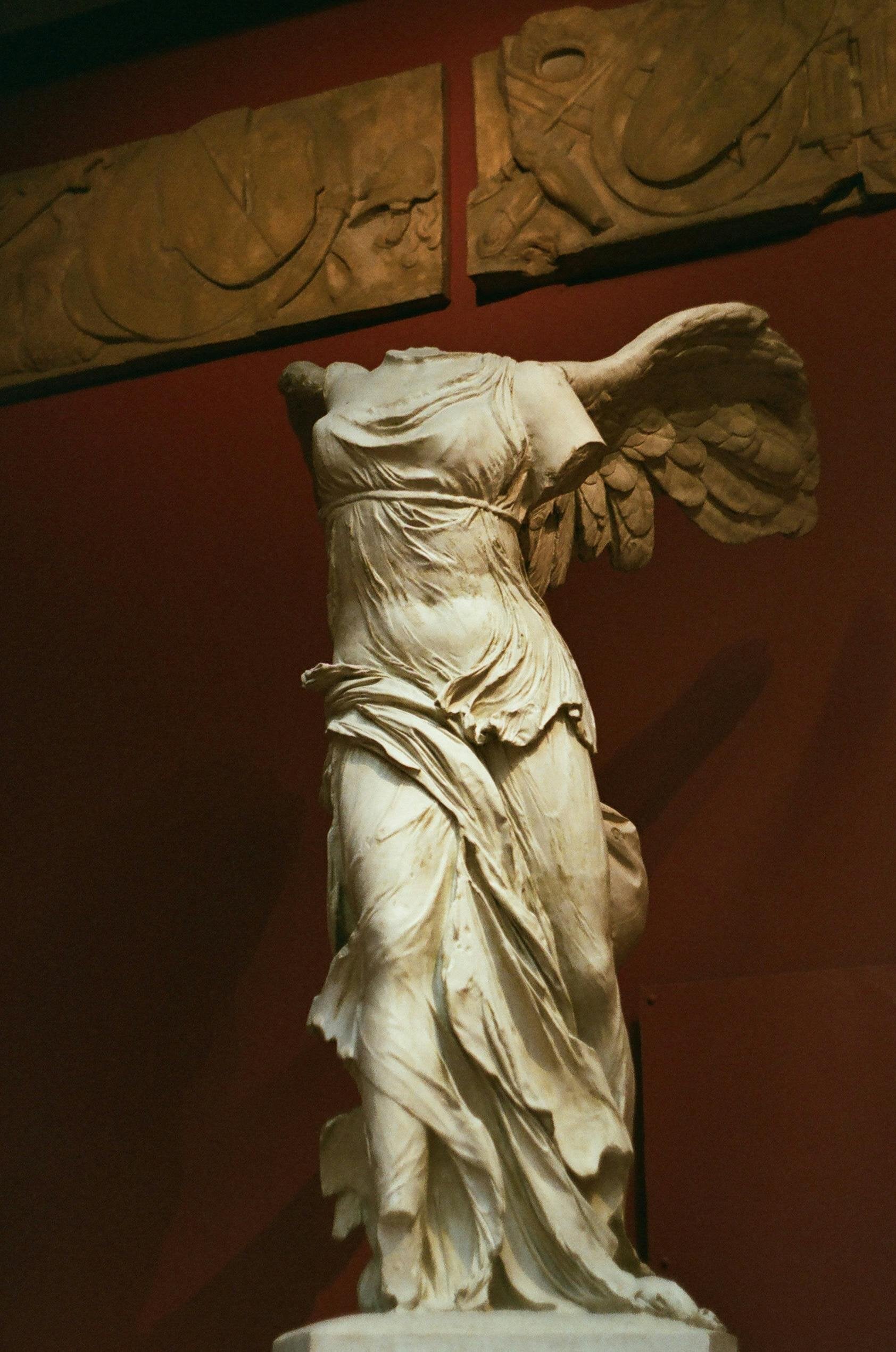
The Nike of Samothrace represents Nike, the winged goddess of victory. The sculpture creates a powerful impression of movement. Her body appears to move forward while the wind presses against her clothing, making the fabric seem almost alive.
The dramatic pose and flowing drapery give the sculpture a sense of energy and motion.
Laocoön Group
The Laocoön Group depicts Laocoön, a Trojan priest, and his sons struggling with serpents. Their twisted bodies, strained faces, and complex poses communicate pain, fear, and intense emotion.
Unlike the calm balance often associated with Classical Greek sculpture, this work emphasises dramatic action and emotional intensity.
A New Approach to Sculpture
Hellenistic sculpture expanded the possibilities of Greek art. Artists explored complex movements, expressive faces, and a wider variety of human experiences.
Through works such as the Nike of Samothrace and the Laocoön Group, Hellenistic artists demonstrated how sculpture could communicate movement, drama, and powerful emotions.
Key terms
Polis – An independent Greek city-state, such as Athens or Sparta.
Kouros – A statue of a nude young man, typical of Archaic Greek sculpture.
Kore – A statue of a clothed young woman, often holding an offering.
Contrapposto – A pose in which the body's weight rests mainly on one leg, creating a more natural stance.
Doric Order – The simplest of the three main Greek architectural orders, with solid-looking columns.
Ionic Order – A Greek architectural order recognised by the scroll-shaped decorations called volutes.
Corinthian Order – A Greek architectural order with capitals decorated with acanthus leaves.
Black-Figure Pottery – A vase-painting technique in which black figures appear against the reddish colour of the clay.
Red-Figure Pottery – A vase-painting technique in which figures remain the colour of the clay against a black background.
Hellenistic Art – Greek art after 323 BCE, known for dramatic movement, emotional expression, and a wider variety of subjects.
Geometric Style – An early Greek artistic style characterised by geometric patterns and simplified figures, especially on pottery.
Orientalizing Style – A style influenced by contact with the Near East and Egypt, introducing new decorative motifs into Greek art.
Knowledge check: Ancient Greek art
Test your understanding of the Geometric, Archaic, Classical, and Hellenistic periods. Click each question below to reveal the answer.
Create Your Own Website With Webador