Postmodern art
Historical context


Postmodern art developed during the late twentieth century, particularly from the 1970s and 1980s onward. By this time, modern art had explored abstraction, experimentation, new materials, and the rejection of traditional artistic rules. Postmodern artists inherited this wide range of possibilities but often questioned the idea that art had to progress toward one new, original style.
Postmodern artists questioned the idea that art had to follow one direction or that artistic progress meant constantly inventing something completely new. They borrowed images from earlier art, advertising, television, films, and popular culture. Some combined different styles, while others used everyday objects, photography, performance, or technology.
Postmodern art does not have one recognizable visual style. Instead, it includes many different approaches connected by a willingness to question traditional definitions of art, originality, identity, and artistic value.
In Janson's account, eclecticism and the mixing of styles are important features of postmodern art. Painting, sculpture, photography, text, and other media can appear together, making strict divisions between artistic categories less useful.


Main Characteristics of Postmodern Art
Mixing styles and historical references
Artists combine elements from different periods, cultures, and artistic traditions rather than following one unified style.
Popular culture and mass media
Advertising, comic books, celebrities, television, and everyday consumer products become subjects of art.
Appropriation
Artists borrow or reuse existing images, objects, and styles, often changing their meaning or placing them in a new context.
Questioning originality
Artists challenge the idea that an artwork must always be unique or entirely invented by one individual.
New artistic media
Art can take the form of a photograph, video, installation, performance, text, or intervention in the natural environment. It does not have to be a traditional painting or sculpture.
The viewer's role
Some works invite viewers to participate or interact with the artwork. The viewer's experience can become part of its meaning.
Conceptual Art
Conceptual art places the idea behind an artwork at the center of artistic practice. The finished object may be less important than the question, process, or meaning the artist wants to explore.
Joseph Kosuth (born 1945)
Joseph Kosuth is an American conceptual artist who explores the relationship between language, meaning, and objects. Rather than focusing on the visual beauty of an artwork, he emphasizes the ideas behind it. His work challenges the traditional belief that art must be a physical object created primarily for visual appreciation.
One and Three Chairs (1965)
This installation consists of a real chair, a photograph of that chair, and a dictionary definition of the word chair.
The three elements represent different ways of understanding the same thing: a physical object, an image, and a word. Kosuth asks viewers to consider the relationship between objects, language, and representation.
The work challenges the traditional expectation that an artwork must be a painting or sculpture made primarily to be admired for its appearance.
Postmodern Architecture
Postmodernism was especially influential in architecture. Some architects reacted against the simplicity, functionalism, and rejection of historical ornament associated with certain forms of modern architecture.
Postmodern buildings could reintroduce historical references, decorative elements, color, symbolism, and playful combinations of styles. Rather than following one strict architectural language, architects often mixed different traditions.
James Stirling (1926–1992)
James Stirling was a British architect whose work combined modern materials and design with references to historical architecture.
Neue Staatsgalerie, Stuttgart (completed in 1984)
The Neue Staatsgalerie combines modern architectural elements with references to earlier architectural traditions. Its composition includes monumental forms, varied materials, and a mixture of historical references and modern design.
The building demonstrates how postmodern architecture can use history selectively rather than simply reproducing one historical style. The result is an eclectic design in which different architectural languages coexist.
Frank Gehry (1929–2025)
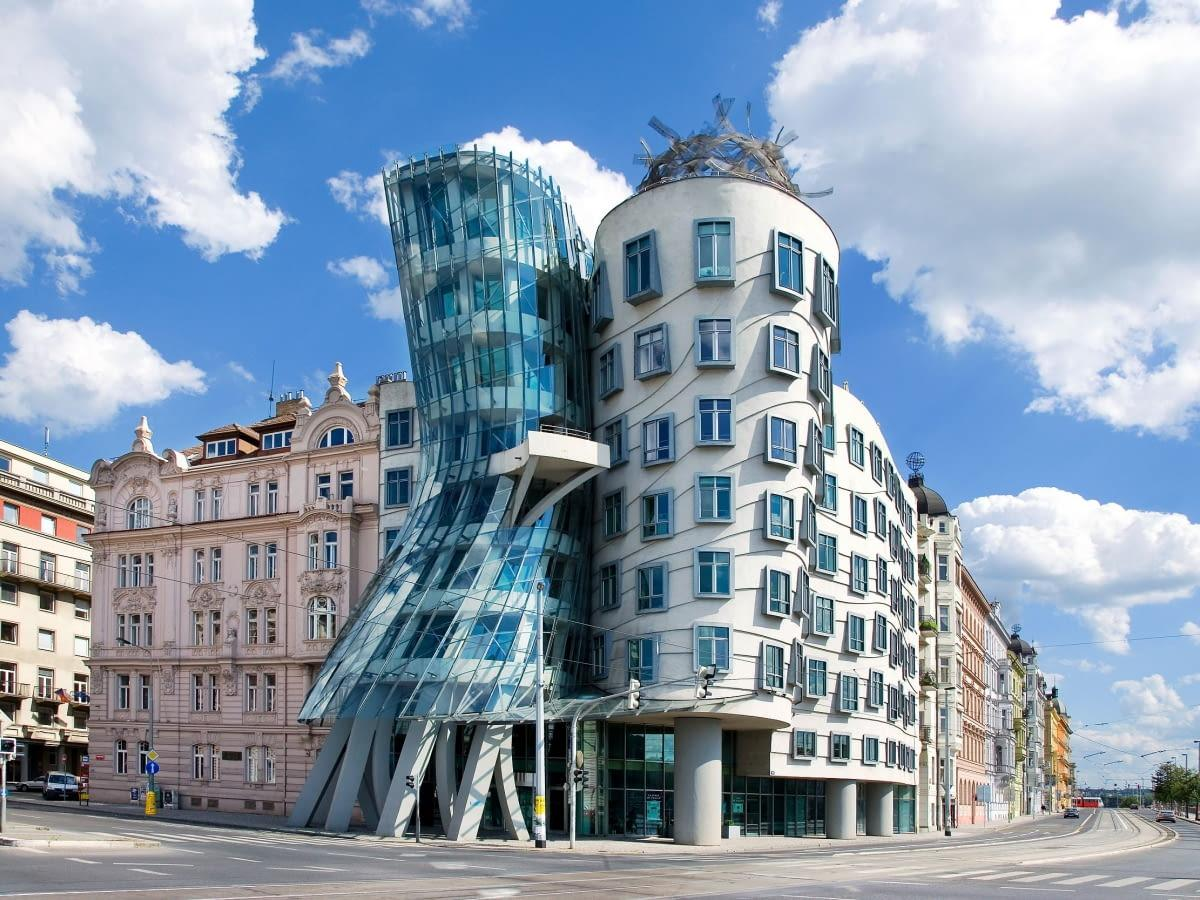
Frank Gehry was a Canadian-American architect known for his sculptural buildings, unusual shapes, and experimental use of materials. His designs often challenge traditional ideas of architectural order, symmetry, and geometric form.
Gehry's architecture is associated with Deconstructivism, an approach that uses fragmented forms, unexpected angles, and irregular compositions to create a sense of movement and complexity.
Guggenheim Museum Bilbao (1997)
The Guggenheim Museum in Bilbao, Spain, is one of Gehry's best-known buildings. Its sweeping, curved forms are covered in titanium panels that reflect changing light. The combination of titanium, glass, and limestone gives the building a dynamic, sculptural appearance.
Rather than following a regular, symmetrical plan, Gehry creates a composition of intersecting volumes and flowing surfaces. The building demonstrates how late twentieth-century architecture could become an expressive sculptural form rather than simply a functional structure.
Text, Photography, and Images
Postmodern artists often explored how photographs, films, advertisements, and other images influence the way people understand identity and reality.
Rather than treating photographs as neutral records of the world, some artists showed how images can construct identities, reinforce stereotypes, and influence what viewers believe.
Barbara Kruger (born 1945)
Barbara Kruger is an American artist known for combining black-and-white photographs with bold text, often in white lettering on a red background.
You Are a Captive Audience (1983)
This work combines a photograph with a direct written statement. The text addresses the viewer and draws attention to the relationship between images, messages, and the people who receive them.
Kruger's work often examines power, consumer culture, gender, and the influence of mass media. By using a visual language associated with advertising and magazines, she makes the viewer reconsider familiar methods of persuasion.
Her work demonstrates how postmodern art can combine photography, graphic design, and language to question the messages that surround us.
Untitled (I Shop Therefore I Am (1987)
Barbara Kruger combines found photographs with bold text, often using red, black, and white. Her work resembles advertising but uses direct statements to criticize consumerism, power, and the influence of mass media.
In I Shop Therefore I Am, Kruger adapts the famous philosophical statement “I think, therefore I am.” Her version suggests that consumer society encourages people to define themselves through what they buy.
The work demonstrates how artists can borrow the visual language of advertising to question the values it promotes.
Cindy Sherman
Cindy Sherman is an American photographer known for creating photographs in which she transforms herself into different fictional characters. Through costumes, makeup, poses, and settings, she explores how photographs, films, and popular culture shape ideas about identity and gender. Her work often questions whether images represent reality or construct artificial versions of it.
Untitled Film Still #21 (1978)
Cindy Sherman created a series of black-and-white photographs in which she appears as different fictional female characters. The images resemble scenes from films, although they do not come from actual movies.
Sherman uses costumes, poses, facial expressions, and settings to imitate familiar images of women from cinema and popular culture.
Her photographs encourage viewers to question how films and the media shape ideas about identity, femininity, and social roles. They also challenge the assumption that a photograph necessarily reveals an authentic or objective reality.
Performance Art and Body Art
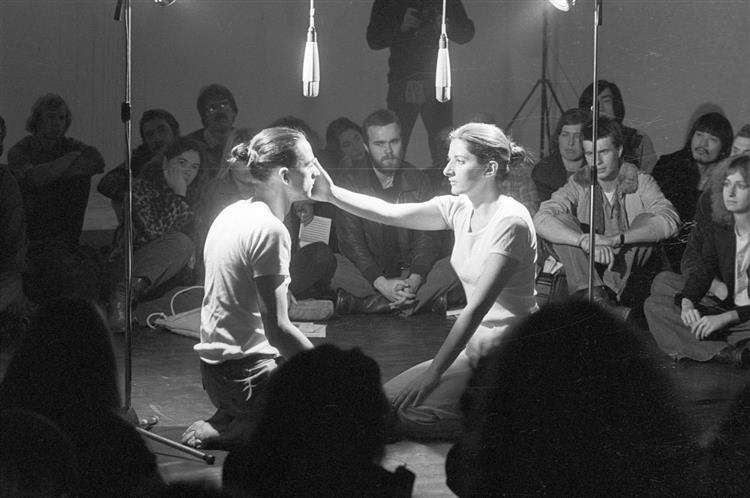
In Performance Art, the artist uses actions, gestures, movement, or an event as the artwork itself. The performance may happen in front of an audience and may exist only for a limited time.
Body Art is closely related but places particular emphasis on the human body as the medium or subject of the work.
Marina Abramović (born 1946)
Marina Abramović is a Serbian performance artist internationally known for using her body as the central medium of her work. Her performances explore endurance, physical and psychological limits, the relationship between the artist and the audience, and the meaning of presence. She has played a major role in establishing performance art as an important form of contemporary artistic expression.
During this performance, Marina Abramović stood passively in a gallery for six hours and allowed visitors to use a selection of objects on her body. The objects included items that could cause pleasure or harm.
As the performance continued, some audience members became increasingly aggressive. The work revealed how people's behavior could change when they were given apparent permission to act without immediate consequences.
Rhythm 0 raises questions about trust, responsibility, power, and the relationship between an artist and an audience. The viewers were not simply observing the work; their actions became part of it.
Land Art: Art Outside the Museum
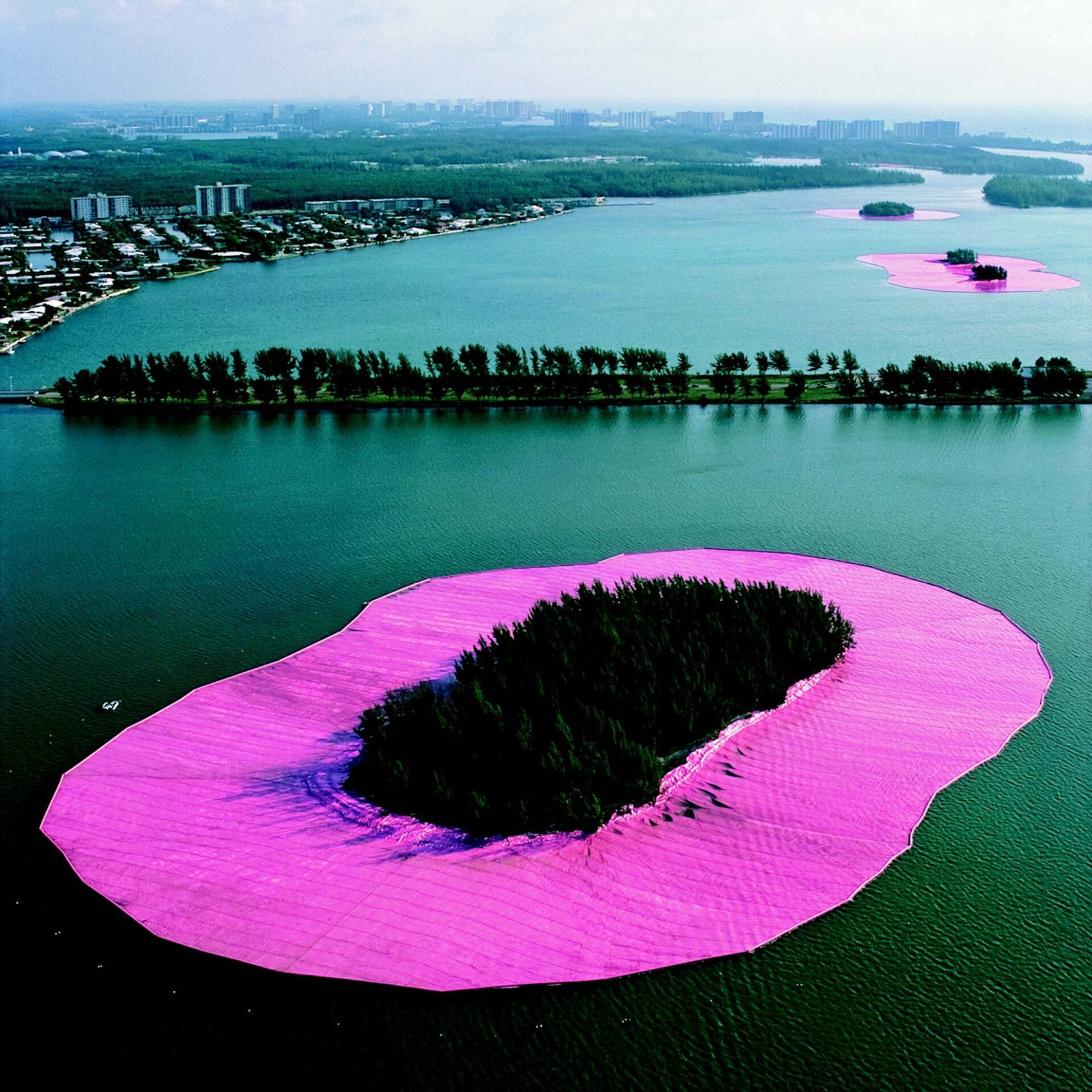
Land Art, also known as Earth Art, developed mainly in the late 1960s and 1970s. Artists created works directly in natural environments, using materials such as earth, rocks, sand, and water.
Many Land Art works are enormous and located far from traditional galleries. They may change through erosion, weather, and the passage of time. Photographs, drawings, and films often provide a record of these works.
Robert Smithson (1938–1973)
Robert Smithson was an American artist and one of the leading figures in Land Art. He created large-scale works in natural environments, using materials such as rocks, earth, and water. His work explored the relationship between art, nature, time, and environmental change, challenging the idea that artworks must be displayed inside museums.
Spiral Jetty (1970)
Robert Smithson created a large spiral-shaped structure from rocks and earth extending into the Great Salt Lake in Utah, United States.
The work connects art with the natural environment. Its appearance changes depending on the water level, weather, and the surrounding landscape.
Spiral Jetty challenges the idea that an artwork must be a portable object displayed inside a museum. The landscape itself becomes an essential part of the experience.
Installation Art and the Meaning of Everyday Objects
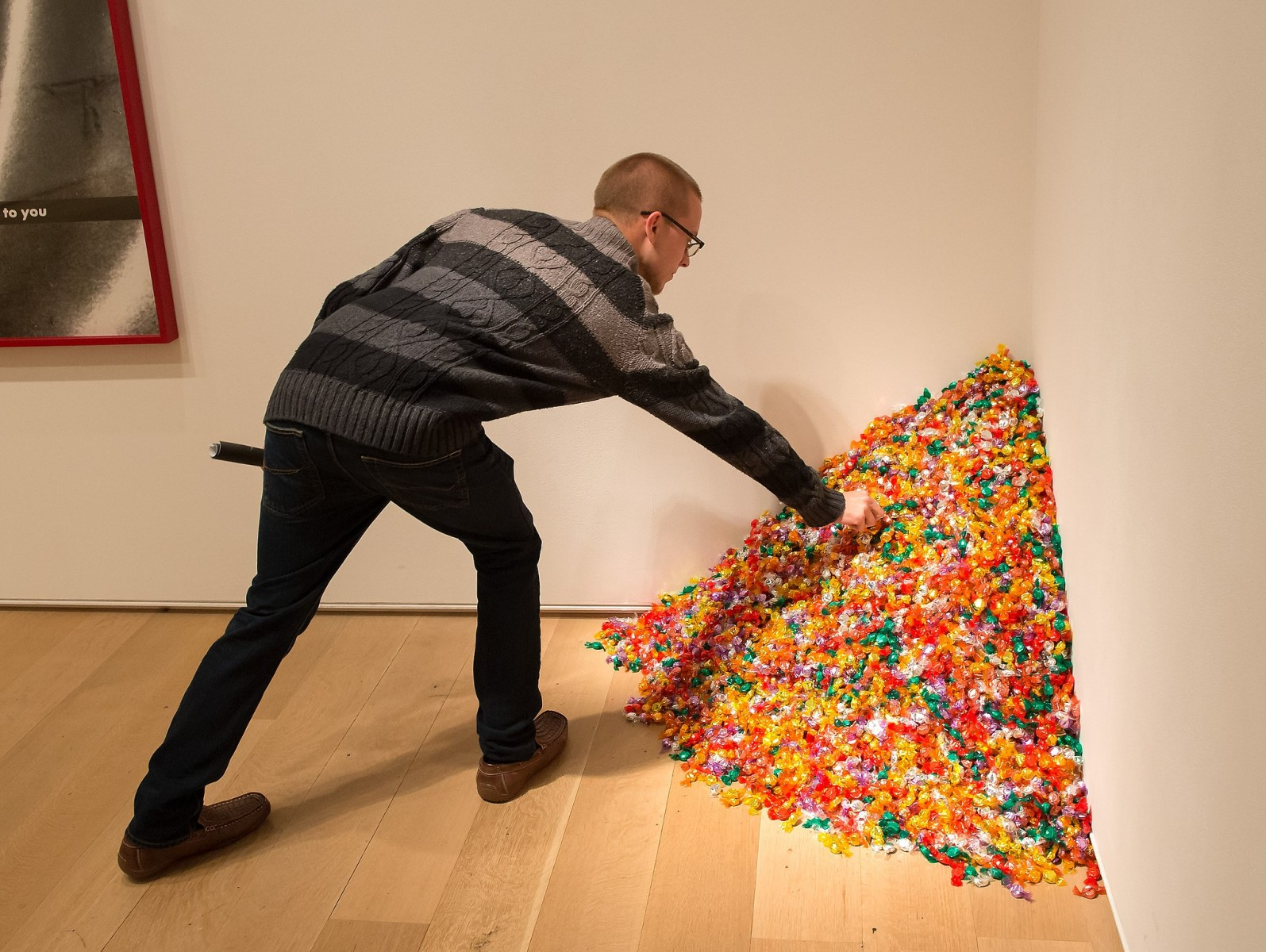
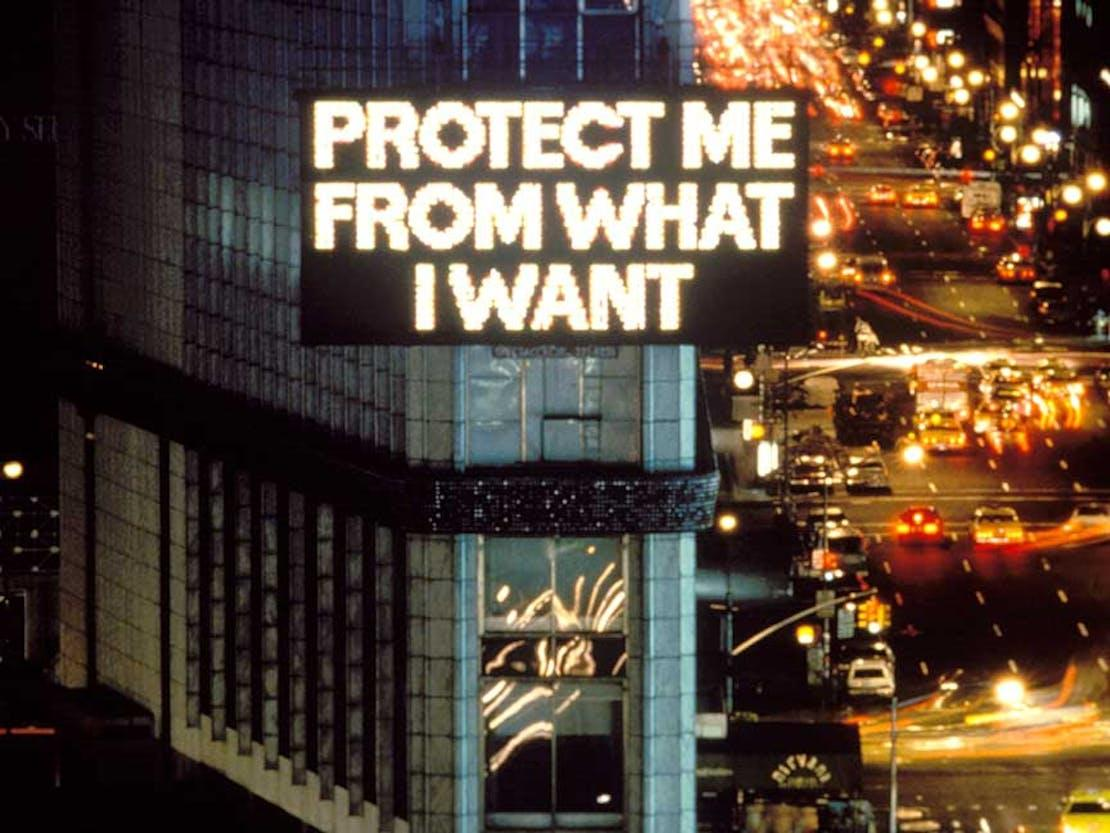
Installation art transforms a space through the arrangement of objects, images, or materials. The viewer may experience the work by walking around it, moving through it, or interacting with its elements.
Some installations change over time or depend on the participation of the audience. Others use ordinary objects to express ideas about relationships, memory, loss, or identity.
Felix Gonzalez-Torres (1957–1996)
Felix Gonzalez-Torres was a Cuban-born American artist known for conceptual artworks and installations that often use ordinary objects. His work explores love, memory, loss, time, and identity through simple but meaningful arrangements. He frequently invited viewers to consider how personal experiences and relationships can be expressed through everyday materials.
Untitled (Perfect Lovers) (1991)
This work consists of two ordinary clocks placed side by side and initially showing the same time.
As time passes, the clocks may gradually become unsynchronized. Their simple arrangement becomes a metaphor for relationships, time, separation, and loss.
The work shows how an everyday object can acquire emotional meaning through its arrangement and the ideas associated with it. The viewer is invited to interpret the work rather than receive one fixed explanation.
Video Art and Multimedia
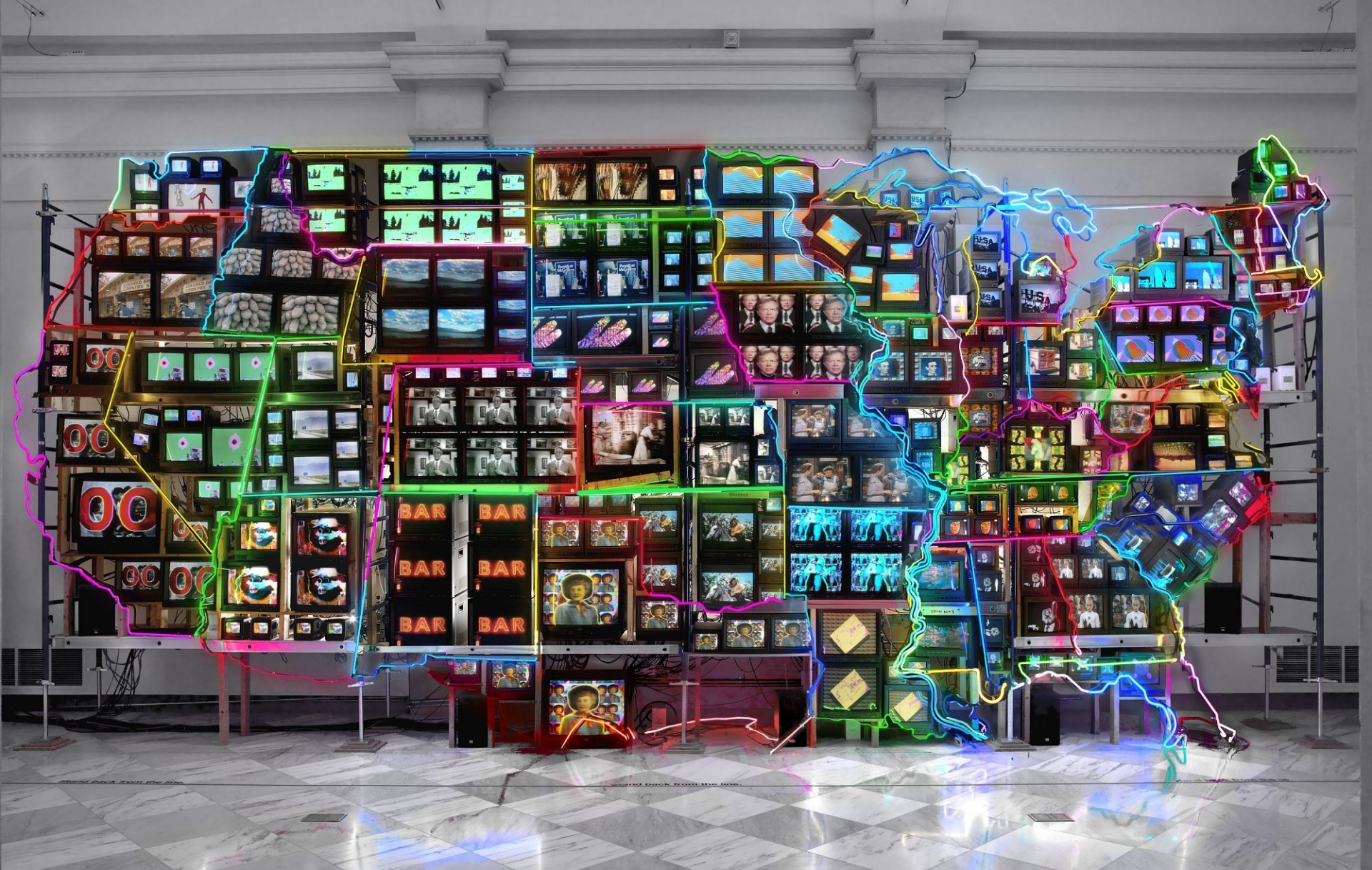
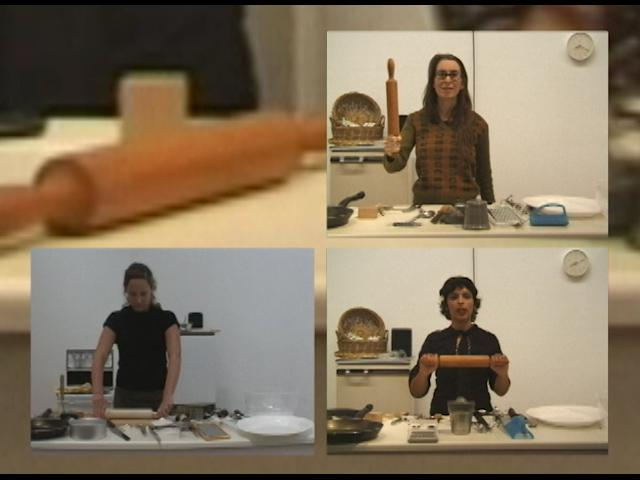
During the second half of the twentieth century, artists increasingly experimented with television, video, sound, photography, and electronic technology.
Multimedia artworks combine different media in a single work or installation. They may include moving images, sound, physical objects, and the surrounding space. This approach challenges the traditional separation between painting, sculpture, film, and other artistic forms.
Nam June Paik (1932–2006)
Nam June Paik was a Korean-American artist and a pioneer of video art. He experimented with television sets, video recordings, electronic images, sound, and installations. His work explored how technology changes the way people see, communicate, and understand the world, helping establish video and electronic media as important artistic tools.
Nam June Paik was a pioneer of video art. In TV Buddha, a statue of Buddha faces a television screen that displays a live video image of the statue itself.
The work creates a relationship between an ancient religious figure and modern electronic technology. It invites viewers to think about observation, self-image, technology, and the relationship between the real object and its image on a screen.
Paik's work demonstrates how technology could become both the material and the subject of an artwork.
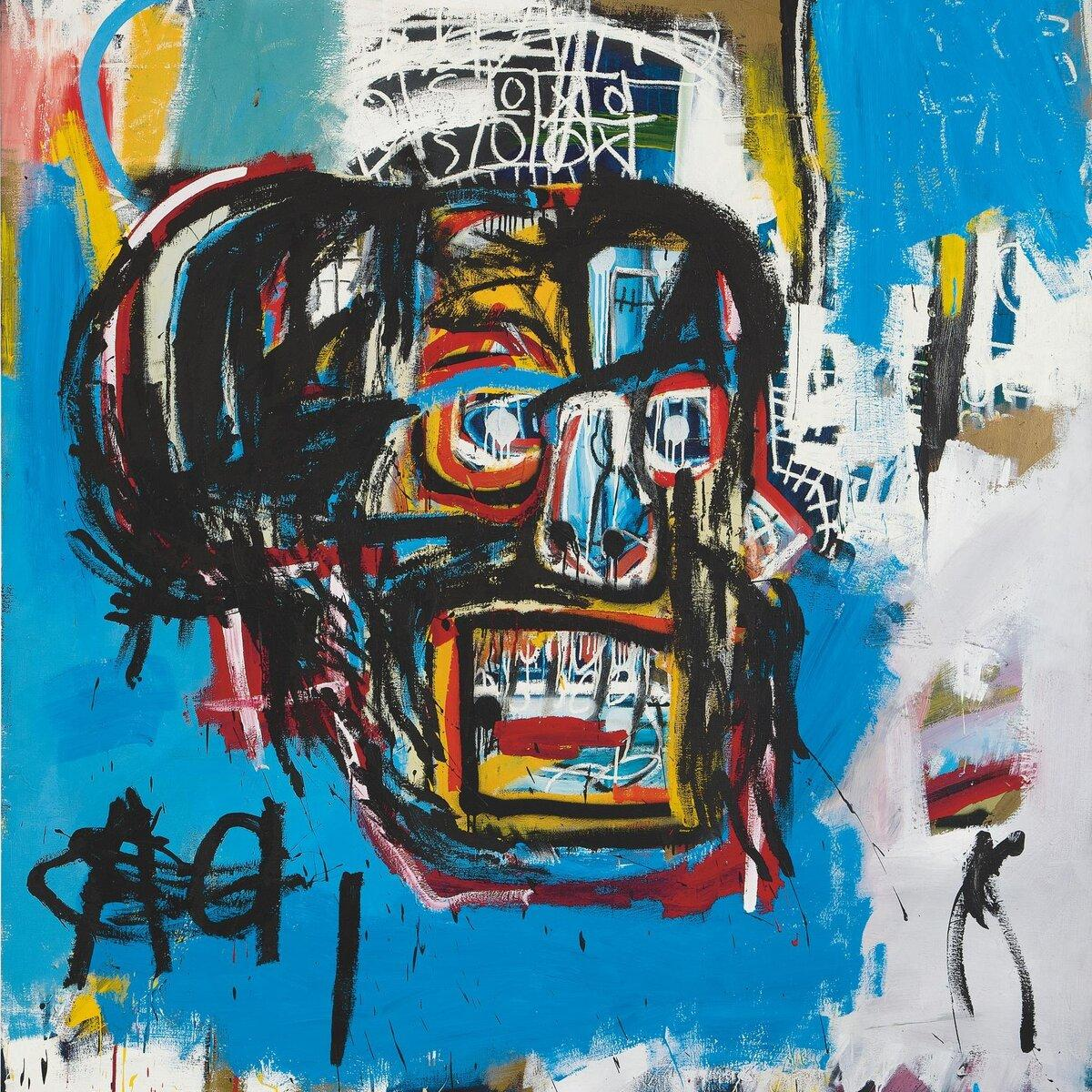
Street Art and Popular Culture
Street art brings artistic expression into public spaces, often outside museums and galleries. It can communicate directly with a broad audience and address political, social, or cultural issues.
Street art overlaps with graffiti, popular imagery, and postmodern approaches to public communication. However, not every street artwork is necessarily Postmodern Art.
Keith Haring (1958–1990)
Keith Haring was an American artist whose style was influenced by graffiti, comics, and New York street culture. He became known for simplified human figures, thick outlines, and energetic symbols. His work often addressed social issues, including inequality, public health, and discrimination, and he believed that art should be accessible to people beyond museums and galleries.
Keith Haring developed a recognizable style based on simplified human figures, thick outlines, and energetic symbols. Influenced by graffiti and street culture, he created works in public spaces as well as galleries.
His poster Crack Down was part of an anti-crack campaign in New York. It demonstrates how his direct visual language could communicate a social message to a wide audience.
Haring challenged the traditional separation between fine art and everyday visual culture by creating accessible images that could reach people outside museums.
Banksy (active since the 1990s)
Banksy is an anonymous British street artist known for stencil-based images that combine humor, irony, and social criticism. His works often address war, consumerism, political power, inequality, and the commercialization of art. By placing images in public spaces, Banksy challenges traditional ideas about where art belongs and who should have access to it.
Girl with Balloon (original version, 2002)
Banksy is an anonymous street artist known for using stencils, humor, and unexpected visual combinations to comment on social and political issues.
Girl with Balloon shows a young girl reaching toward a red, heart-shaped balloon. The simple image can suggest hope, loss, innocence, or the desire to hold on to something that is disappearing.
By placing images in public spaces, Banksy invites people to encounter art in their everyday surroundings. His work also raises questions about public space, ownership, anonymity, and the relationship between street art and the commercial art market.
Postmodern Art and Earlier Traditions
Postmodern artists do not necessarily reject every earlier artistic tradition. Instead, they may reuse earlier styles, images, and techniques in new ways.
This approach differs from the idea that each new artistic movement must completely replace what came before. A postmodern work may combine several historical references, making the past part of the present.
The result is not a single recognizable style but a broad range of artistic possibilities. Two postmodern artists may look completely different while sharing an interest in questioning established categories and meanings.
| Feature | Modernism | Postmodernism |
|---|---|---|
| Approach to tradition | Often seeks new forms and ways to challenge tradition | Often reuses, combines, and reinterprets earlier styles |
| Artistic style | Some movements pursue a distinctive, unified visual language | Frequently combines different styles and media |
| Originality | Often emphasizes originality and artistic innovation | May question what originality means by borrowing existing images |
| Representation | Frequently challenges traditional representation | Also questions how images and cultural messages create meaning |
| Artistic media | Often associated with experimentation within a particular medium | Often blurs boundaries between painting, photography, text, sculpture, and design |
Key terms
- Appropriation: The intentional borrowing, copying, and recontextualizing of pre-existing images, objects, or cultural forms within a new work of art.
- Simulacrum: An image, representation, or copy that replaces reality, possessing no original referent in the real world.
-
Postmodernism: A broad late twentieth-century approach that questions established artistic categories and often combines different styles and media.
-
Eclecticism: The use or combination of elements from different styles and traditions.
-
Appropriation: The reuse of existing images or objects in a new artistic context.
-
Mass media: Communication channels such as television, newspapers, magazines, and other media that reach large audiences.
-
Representation: The way an image or artwork presents or refers to something.
-
Deconstructivism: An architectural approach that challenges conventional ideas of unity, order, and stable geometric form.
-
Interdisciplinary art: Art that combines methods or materials from different artistic fields.
Create Your Own Website With Webador