Egyptian art
Historical context
Ancient Egyptian civilisation developed along the Nile River in northeastern Africa. The river provided water for agriculture, fertile soil, and a means of transportation. Its regular floods helped support a stable agricultural society, while the surrounding deserts offered some natural protection from invasion.
Egypt was unified under a single ruler, the pharaoh, around 3100 BCE. The pharaoh held both political and religious authority and was considered closely connected with the gods. Egyptian society developed a complex system of administration, writing, religion, and monumental construction.
The history of ancient Egypt is traditionally divided into three major periods: the Old Kingdom, the Middle Kingdom, and the New Kingdom. These periods were separated by times of political division and change.
During the Old Kingdom (c. 2686–2181 BCE), Egypt developed a powerful central government and built some of its most famous pyramids. The Middle Kingdom (c. 2055–1650 BCE) was a period of renewed political stability and artistic development. During the New Kingdom (c. 1550–1070 BCE), Egypt became a major military power, and rulers built large temples and elaborate tombs.
Religion influenced nearly every aspect of Egyptian life. Egyptians believed in an afterlife and thought that the body and the spirit needed to be preserved after death. This belief encouraged the development of mummification, tomb decoration, funerary sculpture, and monumental burial architecture.

Characteristics of Egyptian art
Spanning nearly three millennia, Egyptian art adhered to strict canons designed to ensure cosmic harmony, political legitimacy, and eternal preservation rather than transient individual expression.
Religion, Kingship, and the Afterlife
Egyptian art was closely connected with religion, kingship, and the afterlife. Many works were created for temples and tombs rather than simply for public display. They often served to preserve the power and identity of a ruler, honour the gods, or provide what the deceased needed in the afterlife.
Hierarchical scale and divine order
Figures were arranged according to their importance. The pharaoh or a major deity might be represented much larger than servants or other figures. This convention is known as hierarchical scale.
Composite View
In paintings and reliefs, the head and legs are usually shown in profile, while the eye and upper body are shown from the front. This approach, known as the composite view, allowed artists to present the body clearly and completely according to Egyptian artistic conventions.
Idealisation and Permanence
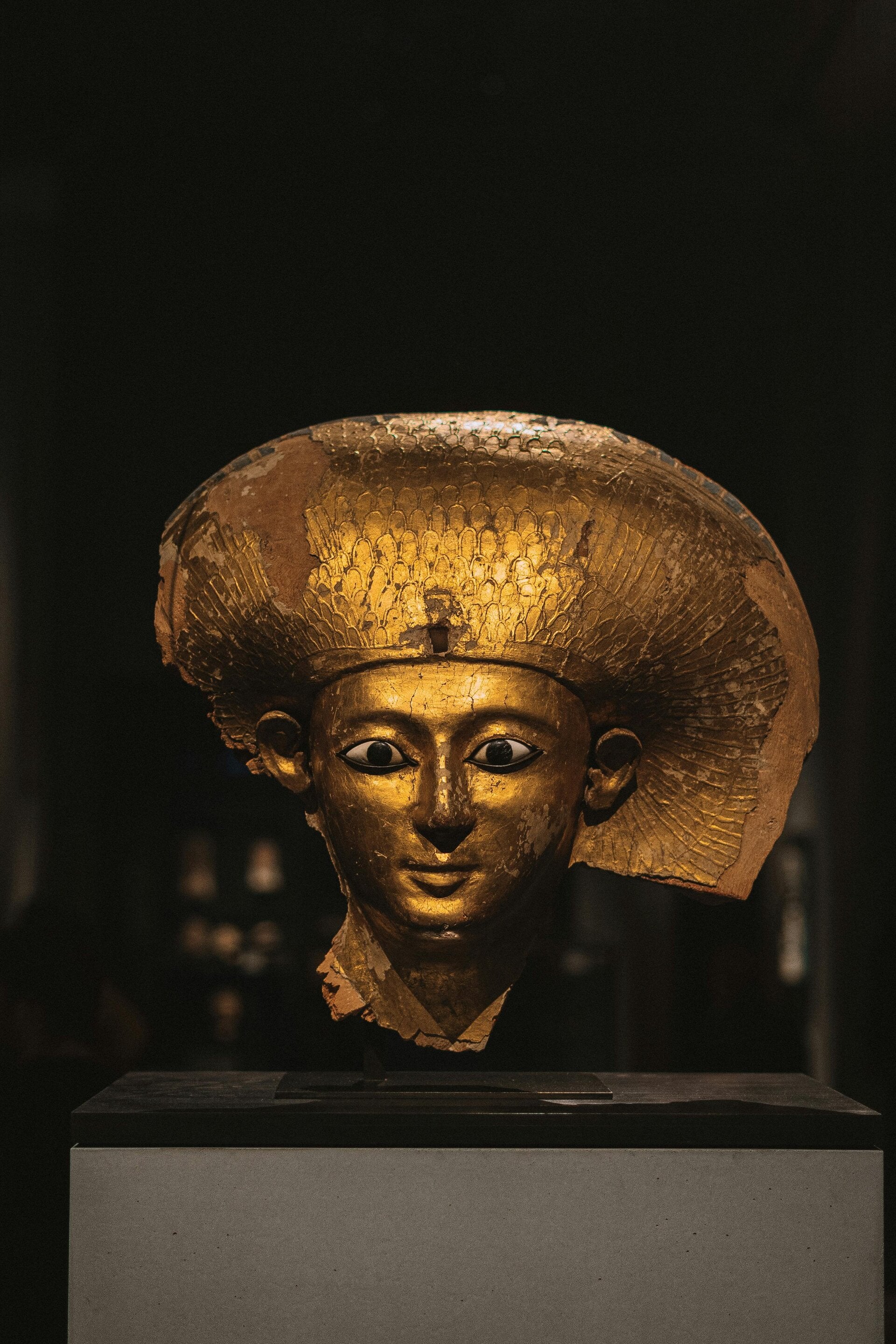
Egyptian sculptures often appear calm, formal, and idealised. Figures are commonly shown in stable, frontal poses, with little movement. These qualities expressed permanence, authority, and order, which were important values in Egyptian society.
Monumental architecture: Pyramids and sacred temples
The Pyramids of Giza
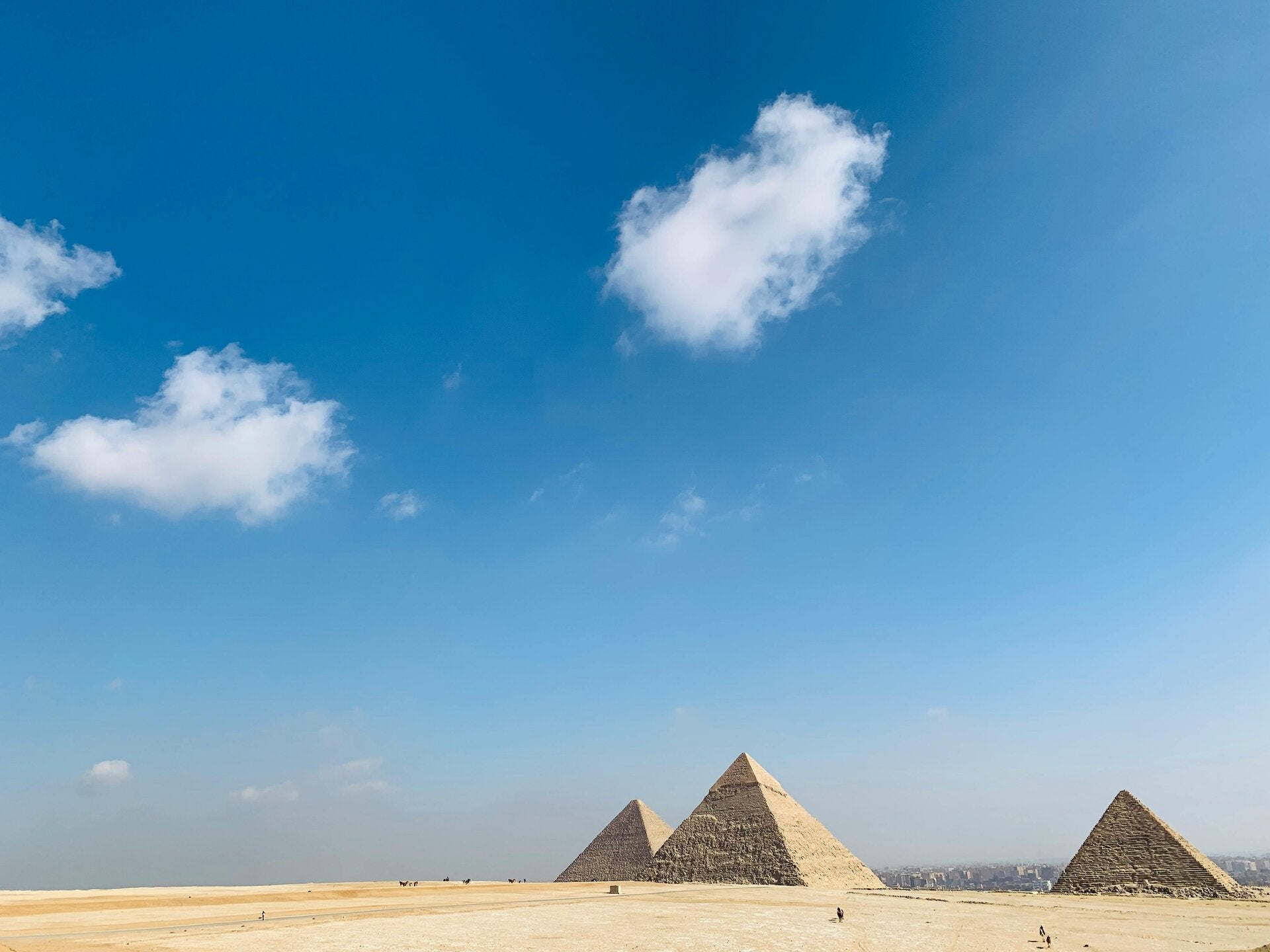
The pyramids are among the most recognisable monuments of ancient Egypt. They were built as royal tombs and reflected the power of the pharaohs and their beliefs about life after death.
The most famous group stands at Giza and consists of the pyramids of Khufu (Cheops), Khafre, and Menkaure, built during the Old Kingdom. The Great Pyramid of Khufu is the largest of the three.
Earlier royal tombs included the stepped pyramid of King Djoser at Saqqara, designed by the architect Imhotep during the Third Dynasty. It represents an important stage in the development of monumental stone architecture.
The pyramids were parts of larger funerary complexes, which could include temples and other structures used in rituals connected with the dead ruler.
The Great Sphinx
The Great Sphinx of Giza is a monumental sculpture with a human head and a lion’s body. It is generally associated with the reign of Khafre. Its enormous scale and combination of human and animal features express royal power and may also have had religious significance.
Temples
Egyptian temples were places dedicated to the gods and centres of religious ceremonies. Their architecture often included large gateways, courtyards, halls with columns, and sanctuaries.
One of the most important temple complexes was dedicated to Amun, Mut, and Khonsu at Thebes, in the area of modern Luxor and Karnak. Monumental columns, statues, and reliefs communicated the power of the gods and the rulers who supported their cults.
During the New Kingdom, Queen Hatshepsut commissioned a remarkable funerary temple at Deir el-Bahari. Its terraces and long horizontal lines were designed to harmonise with the cliffs behind it.

Sculpture and Relief
Egyptian sculpture served religious and funerary purposes as well as political ones. Statues of pharaohs and other important people could be placed in temples or tombs. They were often intended to provide a lasting image of the individual rather than to capture a passing expression.
Royal statues typically emphasised strength, youth, and composure. Their formal poses and idealised features presented the ruler as stable and powerful.
Reliefs were carved into stone walls and could be painted. They depicted gods, pharaohs, ceremonies, battles, offerings, and everyday activities. In tombs, images of food production, hunting, fishing, and household work could be connected with the belief that these activities would continue in the afterlife.
Egyptian art also used symbols and hieroglyphic inscriptions. Images and writing often worked together to communicate a person's identity, titles, achievements, and religious beliefs.

Painting and tomb decoration
Egyptian tomb paintings provide valuable information about religious beliefs and daily life. They show farming, fishing, feasting, music, animals, and scenes involving the deceased.
Artists used clear outlines, flat areas of colour, and established conventions for representing human figures. Rather than creating the illusion of a single viewpoint, they organised figures and objects so that the essential information remained visible.
The scale and placement of figures communicated social status. Important people were often shown larger than those who served them.
Tomb decoration was not simply a record of daily life. It also had a religious purpose: images of food, servants, animals, and activities could help provide for the deceased in the next world.
Key artworks and monuments to remember
1. Step Pyramid of Djoser, Saqqara, c. 27th century BCE
An early monumental stone pyramid built for a pharaoh. It represents an important stage in the development of Egyptian stone architecture.
2. Pyramids of Khufu, Khafre, and Menkaure, Giza, Old Kingdom
Royal tombs and major achievements of Egyptian architecture. The Great Pyramid of Khufu is the largest of the three.
3. Great Sphinx of Giza, Old Kingdom
A monumental sculpture combining a human head with a lion’s body, generally associated with the reign of Khafre.
4. Tomb of Ti, Saqqara, Old Kingdom
Tomb decoration showing activities and scenes connected with Egyptian life and beliefs.
5. Temple of Queen Hatshepsut, Deir el-Bahari, New Kingdom
A funerary temple notable for its terraces and its relationship with the surrounding cliffs.
6. Temple Complex of Amun, Mut, and Khonsu, Thebes
An important centre of Egyptian religious architecture, developed over many centuries.
7. Tomb of Khnumhotep II, Beni Hasan, Middle Kingdom
Tomb paintings that provide evidence of Egyptian artistic conventions and social life.

Key terms and lesson review
Key terms
Pharaoh
The ruler of ancient Egypt, who held political and religious authority.
Afterlife
The existence believed to continue after death.
Mummification
The process of preserving the body after death.
Hieroglyphs
A system of Egyptian writing that used picture-like signs.
Composite View
An artistic convention showing different parts of the human body from the viewpoints that make them easiest to recognise: the head and legs in profile, but the eye and upper body from the front.
Hierarchical Scale
A convention in which important figures, such as pharaohs or gods, are shown larger than less important figures.
Funerary Architecture
Buildings created for burial and rituals connected with the dead, such as pyramids and tombs.
Relief
A sculpture carved into a surface, such as a stone wall, where the figures remain attached to the background.
Knowledge check
Test your understanding of ancient Egyptian art, conventions, and monuments. Select each question below to reveal the answer.
Create Your Own Website With Webador