Art of the early middle ages
Historical context
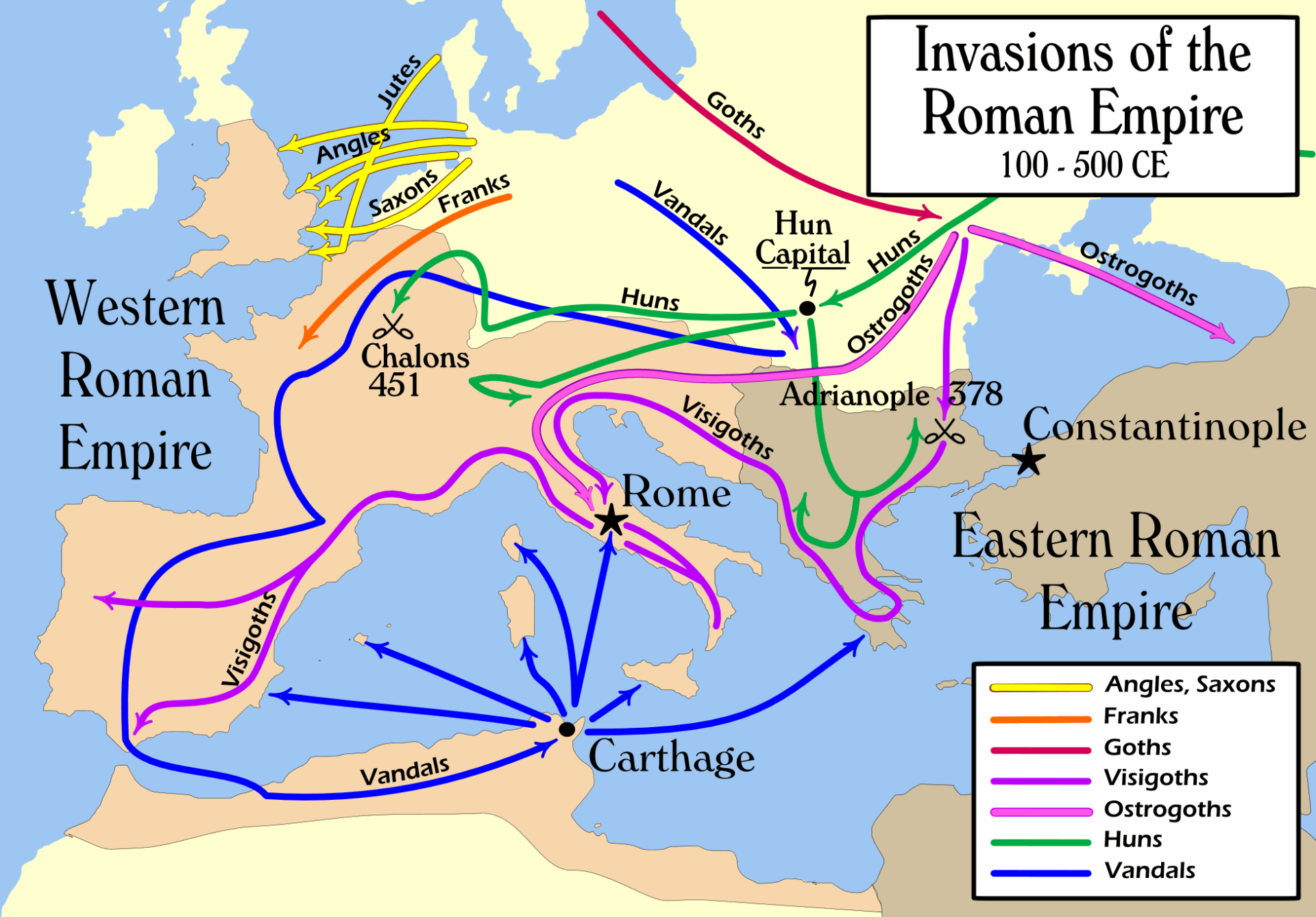
The Early Middle Ages began after the fall of the Western Roman Empire in AD 476. Western Europe became divided among different kingdoms, including those established by Germanic peoples. Political power was less centralized than it had been under Rome, and monasteries and the Christian Church became important centers of religious, cultural, and artistic life.
Art during this period developed differently across Europe. Some works reflected the traditions of migrating peoples, whose art often emphasized intricate patterns, animals, interlacing forms, and portable objects made from metal. In Ireland and Britain, Christian monasteries became important centers of manuscript production. Later, the Carolingian and Ottonian rulers supported artistic projects that revived aspects of Roman and early Christian art.
Rather than following one unified style, Early Medieval art combined different traditions and adapted them to new religious and political circumstances.
Insular Art: Celtic and Anglo-Saxon Traditions
Illuminated Manuscripts
The term Insular art refers to art produced in the British Isles, especially Ireland and Britain, during the early medieval period. It combines local Celtic and Anglo-Saxon artistic traditions with Christian themes.
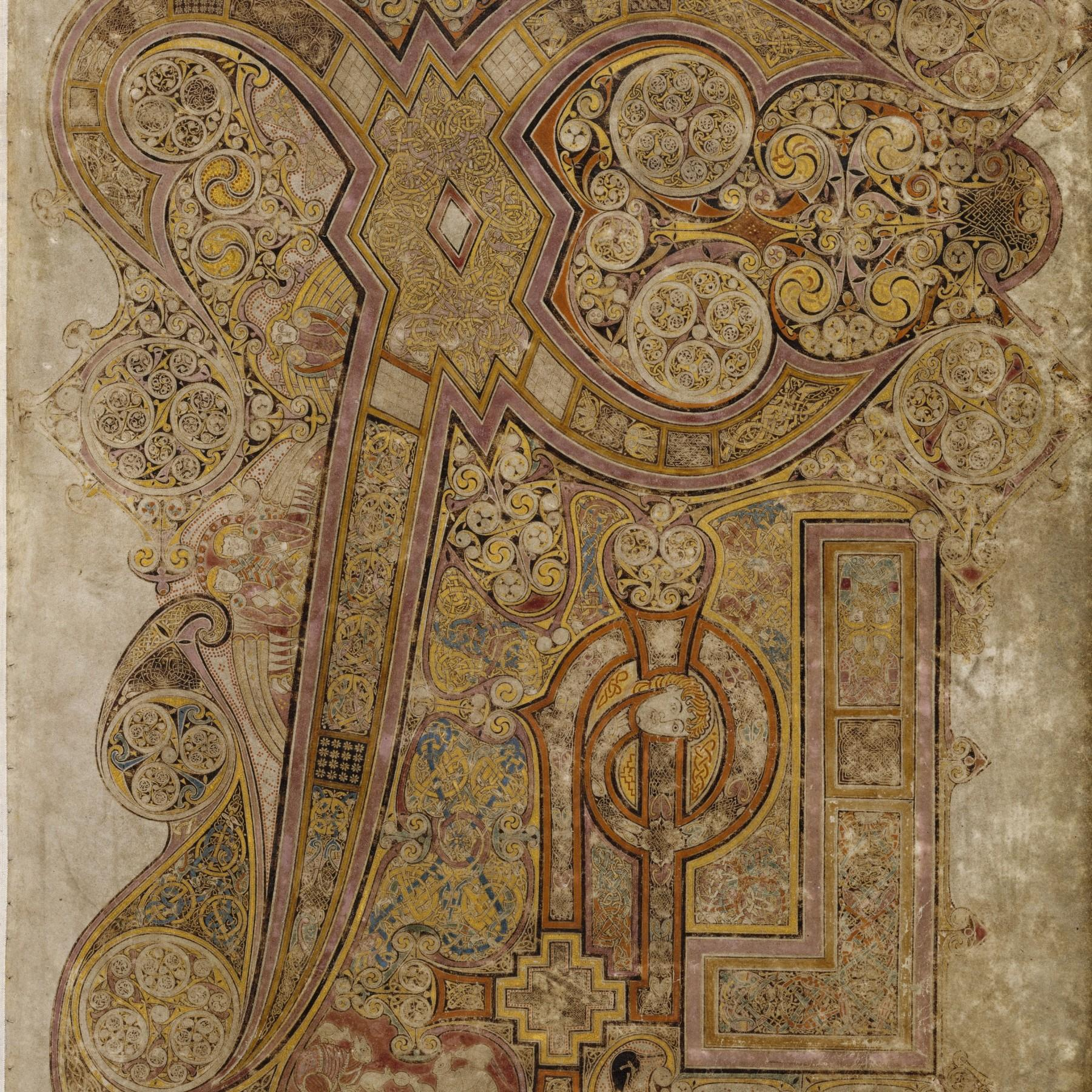
One of the most important forms of Insular art was the illuminated manuscript. Monks copied religious texts by hand and decorated them with elaborate letters, intricate patterns, and images. Since books were produced before the invention of printing, they required considerable time and skill.
The Book of Kells, an illuminated Gospel book created around the late eighth or early ninth century, is one of the best-known examples. Its pages contain elaborate interlacing patterns, spirals, animal forms, and richly decorated initials.
The decoration often fills the page with complex designs. Rather than relying on realistic space or naturalistic bodies, the artists used intricate patterns to create visual richness and emphasize the sacred importance of the text.
Metalwork and Decorative Art
Early Medieval artists also created decorated weapons, jewelry, brooches, and other portable objects. Interlacing lines and stylized animal forms were common. These objects demonstrate the importance of craftsmanship and ornament in the art of the period.
Christian symbols and local decorative traditions sometimes appeared together, showing how Christianity became integrated into different regional cultures.
Carolingian Art
Charlemagne and the Revival of Roman Traditions
The Carolingian period takes its name from the dynasty of rulers that included Charlemagne, who became emperor in AD 800. Charlemagne sought to strengthen his empire and present himself as the heir to Roman imperial authority.
His court encouraged learning, manuscript production, and the construction of churches and palaces. This cultural revival is often called the Carolingian Renaissance.
Carolingian artists looked back to Roman, early Christian, and Byzantine art. They studied older models but did not simply copy them. Their work adapted these traditions to the political and religious needs of the Carolingian Empire.
Architecture: The Palace Chapel at Aachen
One of the most important buildings of this period is the Palace Chapel at Aachen, constructed for Charlemagne in the late eighth and early ninth centuries.
Its design was influenced by earlier Christian and Byzantine architecture. The central space is organized around an octagonal plan and is surrounded by a gallery. The building's monumental form and rich decoration reflected Charlemagne's imperial ambitions and the importance of Christianity to his rule.
The chapel became a symbol of the connection between political authority, religious faith, and the legacy of Rome.
Carolingian Manuscript Illumination
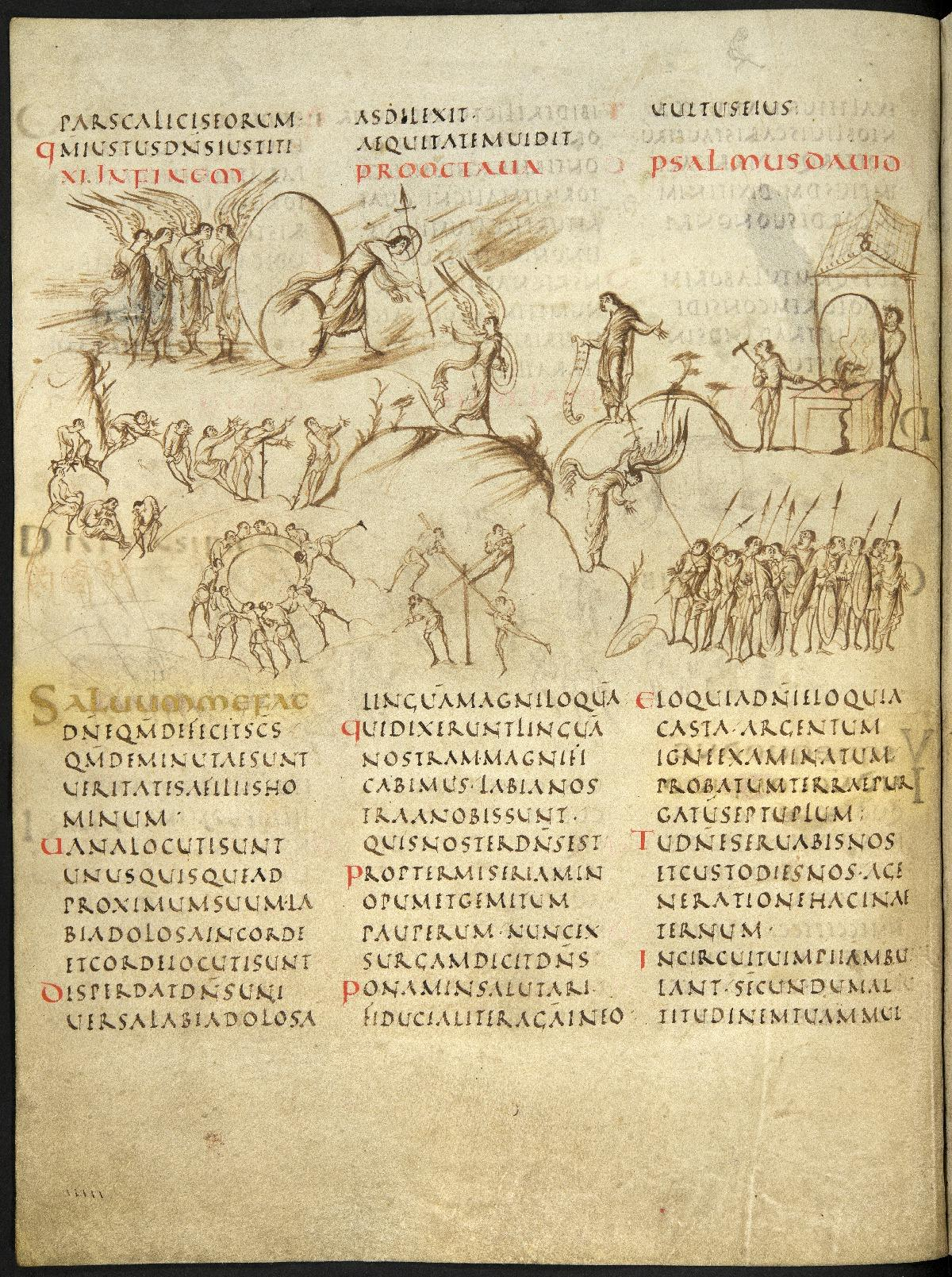
Carolingian manuscript artists sought to revive aspects of classical naturalism. Figures could appear more rounded and three-dimensional than those in many earlier Insular works. Artists also paid attention to the human body, drapery, and spatial settings.
Nevertheless, manuscript illumination remained primarily religious in purpose. Its images helped communicate biblical stories and reinforce the authority of Christian texts.
Ottonian Art
Historical Context
Ottonian art developed in the tenth and early eleventh centuries under the rulers of the Ottonian dynasty in the German lands. Like the Carolingians, the Ottonian rulers connected their authority with the Roman imperial tradition and the Christian Church.
Churches and monasteries continued to serve as important centers of artistic production. Manuscripts, church objects, sculpture, and architecture were often commissioned by rulers, bishops, and religious communities.
Characteristics of Ottonian Art
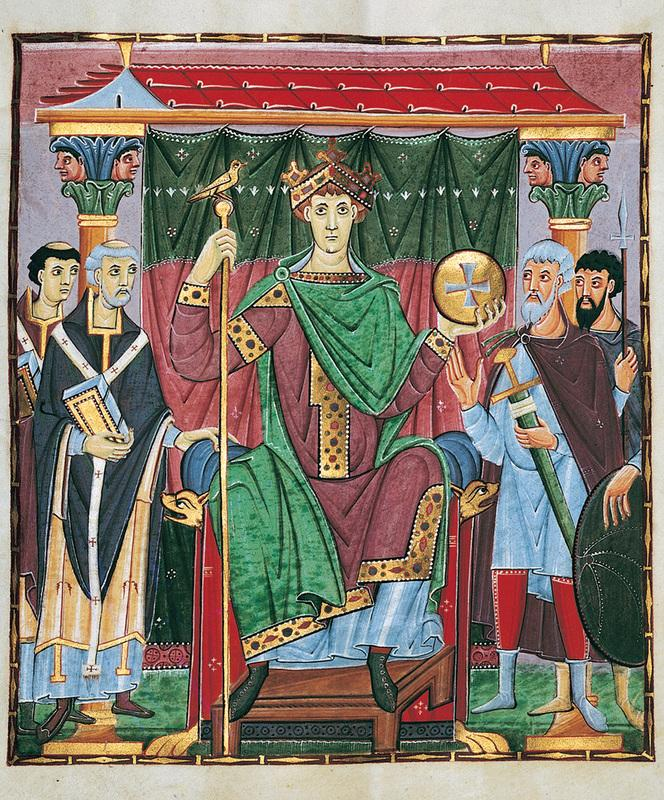
Ottonian art continued some Carolingian traditions but often emphasized spiritual authority and symbolic meaning over naturalistic representation. Figures may appear formal, expressive, and arranged according to their religious importance.
The size, gestures, and placement of figures could communicate hierarchy. The goal was not always to reproduce the visible world realistically, but to make religious ideas understandable and powerful.
Ottonian art demonstrates the continuing importance of the Church and the close relationship between religious institutions and political rulers in medieval Europe.
Key terms
Insular art – art produced in the British Isles during the early medieval period.
Illuminated manuscript – a handwritten book decorated with painted images, ornament, and decorated letters.
Interlacing – a decorative pattern made from lines or bands that weave over and under one another.
Carolingian Renaissance – a revival of learning and artistic production under Charlemagne and his successors.
Carolingian art – art associated with the Carolingian rulers, especially during the eighth and ninth centuries.
Ottonian art – art produced under the Ottonian rulers, mainly in the tenth and early eleventh centuries.
Patronage – financial or material support given to artists by rulers, religious institutions, or other sponsors.
Create Your Own Website With Webador