The art of the ancient Near East
Historical context
The Ancient Near East was one of the earliest centres of urban civilisation. Much of its early history developed in Mesopotamia, a region between the Tigris and Euphrates rivers, located mainly in present-day Iraq.
The fertile land supported agriculture, which allowed settlements to grow into cities. People developed systems of government, organised religion, trade, and writing. One of the most important inventions was cuneiform, a writing system made by pressing wedge-shaped marks into clay tablets.
Unlike ancient Egypt, Mesopotamia was not ruled by one kingdom throughout most of its early history. Different cities and empires rose to power, including the Sumerian city-states, the Akkadian Empire, Babylon, and Assyria. Later, the Persian Empire controlled a vast territory that included Mesopotamia.
Art and architecture were closely connected to religion and political power. Rulers commissioned monuments to honour gods, demonstrate their authority, and record military victories.

Major artistic traditions

1. Sumerian art
Ziggurats, temples, and votive figures from some of the earliest cities in Mesopotamia.

2. Akkadian and Babylonian art
Royal monuments, written laws, and monumental gates expressing the power of kings and cities.

3. Assyrian art
Palace reliefs, royal lion hunts, and colossal protective figures.

4. Persian art
Monumental palaces and reliefs showing representatives of the empire's many peoples.
Sumerian art
The Sumerians established some of the earliest cities in southern Mesopotamia. Each city often had its own ruler and patron deity.
Ziggurats and Temples
Sumerian temples were important religious and economic centres. A characteristic building was the ziggurat, a massive stepped structure made primarily of mud bricks. It had several levels and a shrine at the top. Unlike Egyptian pyramids, ziggurats were not tombs; they were associated with the worship of gods.
One important example is the White Temple at Uruk, built on a raised platform. Its elevated position made the temple visible from the surrounding city.
Votive Figures
Sumerian worshippers sometimes dedicated small statues to the gods. These figures were placed in temples and represented people who wished to remain symbolically present before a deity.
The figures often have large, staring eyes and their hands clasped in a gesture of prayer. Their simplified forms emphasise devotion rather than realistic physical appearance.

Akkadian and Babylonian art
Akkadian Art
The Akkadian Empire united many Mesopotamian territories under a central ruler. Art increasingly presented the king as a powerful military and political leader.
The Victory Stele of Naram-Sin, created around the 23rd century BCE, shows the king leading his soldiers up a mountain while defeating his enemies. Naram-Sin is represented as larger and more important than the other figures. The composition rises diagonally, creating a sense of movement and victory.
The monument demonstrates how art could communicate the ruler's power and his special relationship with the gods.
Babylonian Art
Babylon became one of the most important cities of Mesopotamia. Babylonian rulers used monuments and inscriptions to demonstrate their authority and establish laws.
The Stele of Hammurabi, from the 18th century BCE, combines writing and imagery. It contains a collection of laws associated with King Hammurabi. At the top, the king stands before the sun god Shamash, who is associated with justice. The scene presents the laws as having divine authority.
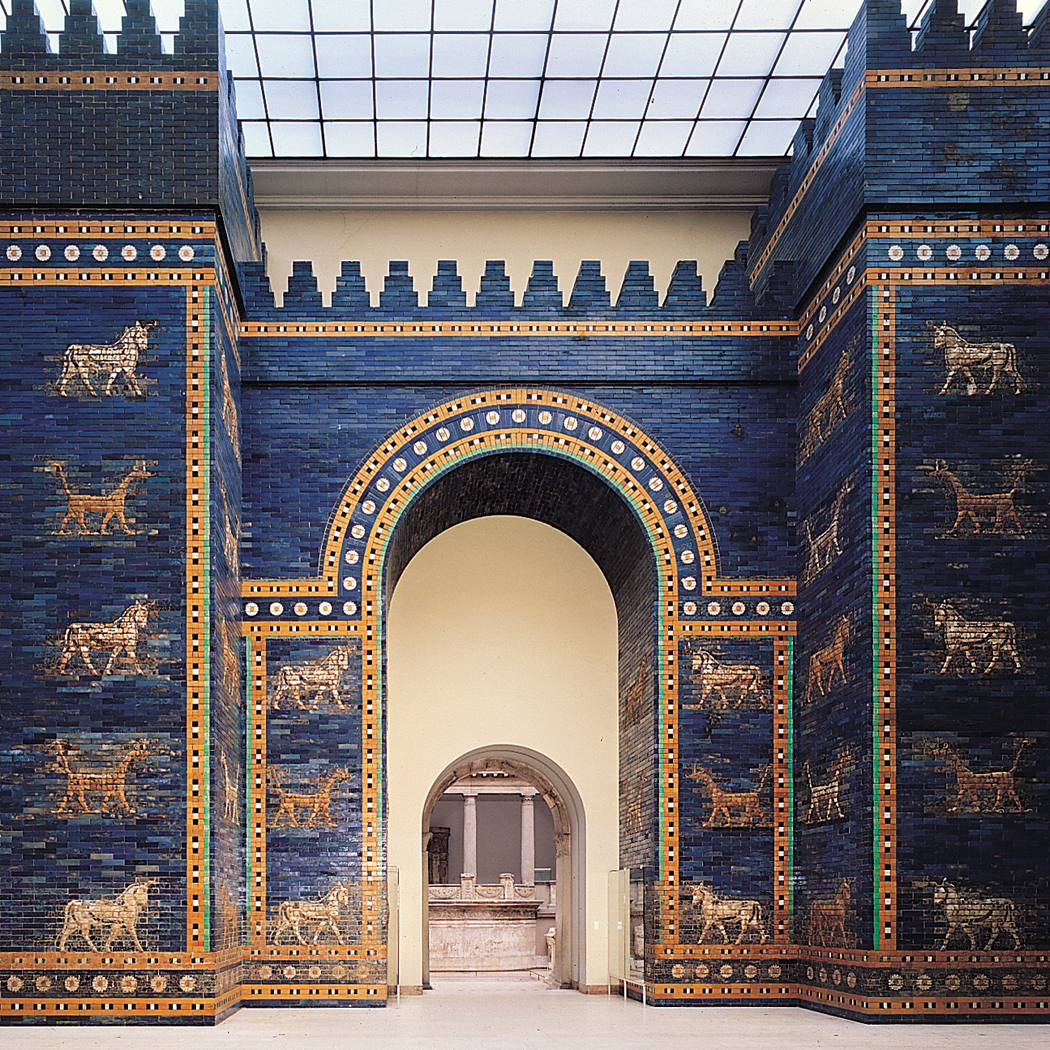
Much later, during the reign of Nebuchadnezzar II in the 6th century BCE, Babylon became famous for its monumental architecture and decorated city gates.
The Ishtar Gate was built with blue glazed bricks and decorated with images of animals, including bulls and dragon-like creatures associated with Babylonian deities. Its colour and decoration made it an impressive entrance to the city.
Assyrian art
The Assyrians built a powerful empire in northern Mesopotamia. Their kings commissioned large palaces decorated with reliefs that communicated royal authority and military strength.
Palace Reliefs
Assyrian palace walls were decorated with carved stone reliefs showing battles, royal ceremonies, hunting scenes, and religious figures.
One especially important subject was the royal lion hunt. Lions symbolised danger and strength, while the king's victory over them demonstrated his courage and ability to control chaos.
The figures are often shown in profile, with carefully observed details of clothing, weapons, horses, and animals. Although these reliefs can appear realistic, their purpose was not simply to record events. They presented the king as a powerful ruler protected by the gods.
Colossal Protective Figures
Assyrian palaces also contained colossal protective figures, including winged human-headed bulls. These figures guarded entrances and symbolised strength and protection.

Persian art
The Persian Empire expanded across a vast territory, bringing together many peoples and artistic traditions. Persian rulers used architecture and relief sculpture to express the unity and power of their empire.
Persepolis
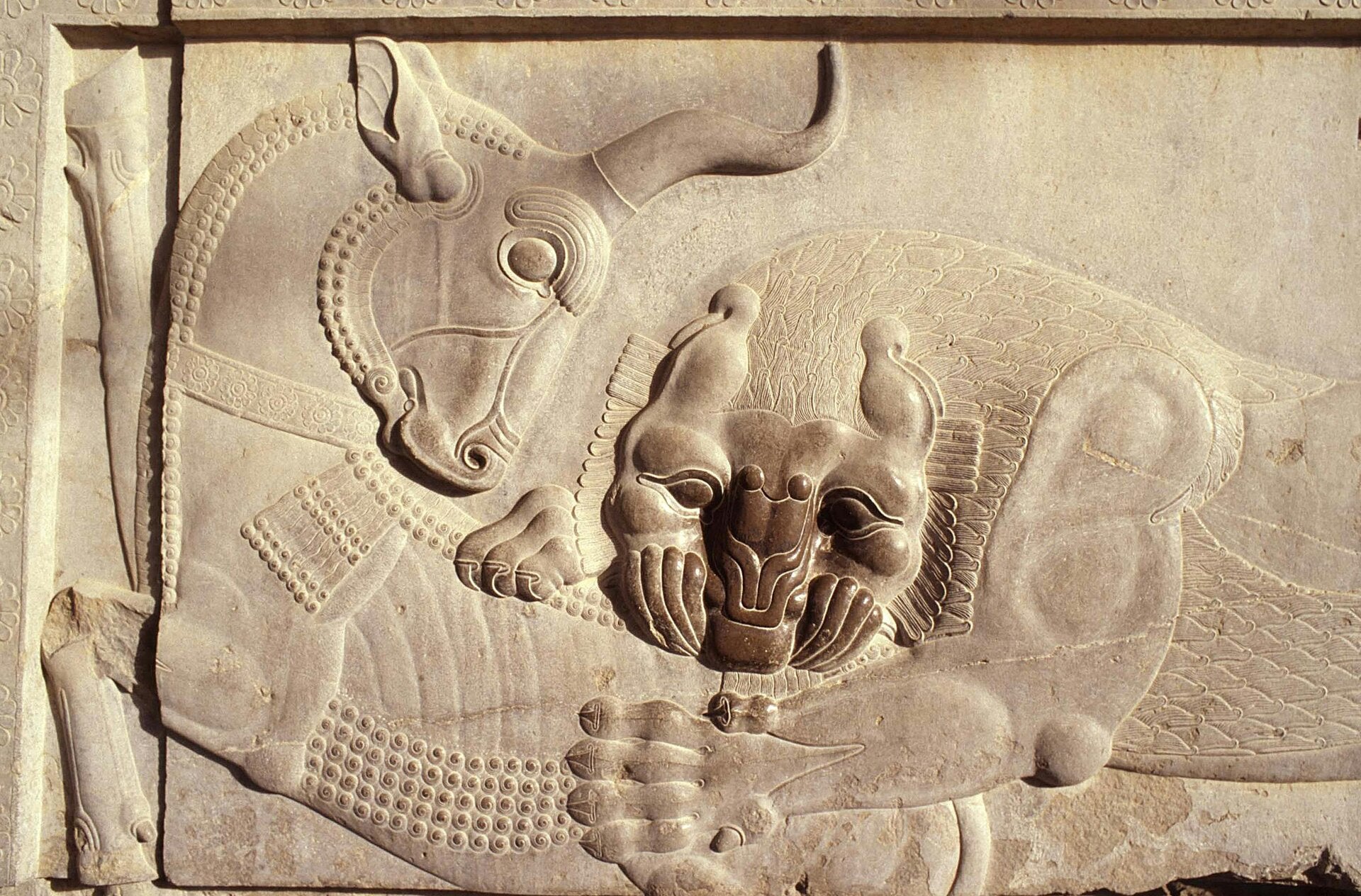
Persepolis was an important ceremonial capital of the Persian Empire, developed under Darius I and his successors from the late 6th century BCE.
Its monumental stairways, columns, palace buildings, and carved reliefs created an impressive setting for royal ceremonies.
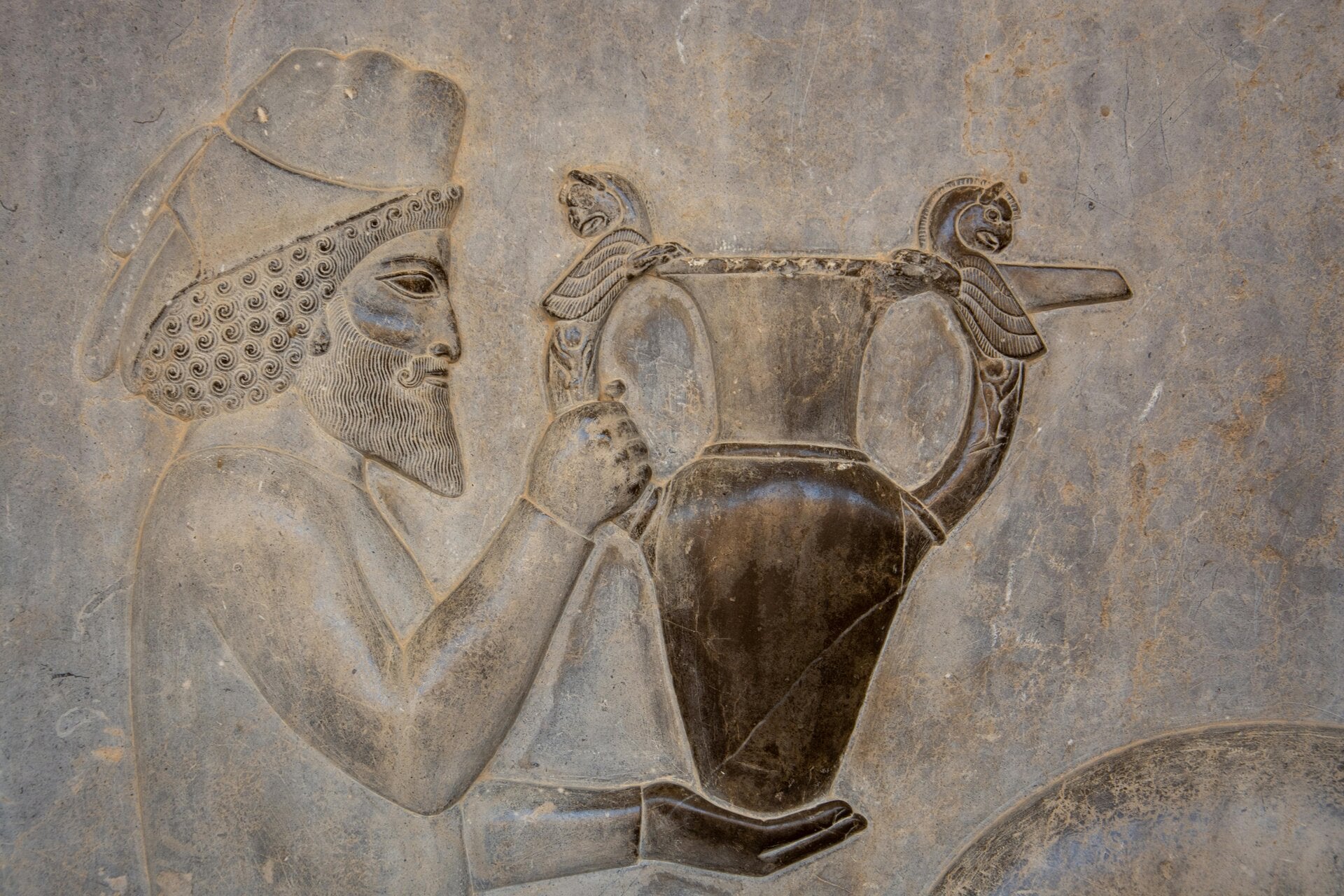
The reliefs at Persepolis show representatives of different peoples bringing gifts or tribute to the Persian king. They are arranged in orderly processions, with each group wearing distinctive clothing and carrying characteristic objects.
Unlike the violent battle scenes often found in Assyrian palaces, these reliefs emphasise order, cooperation, and the diversity of the empire under the king's authority.
Key Artworks and Examples
1. White Temple at Uruk
Sumerian art
An early example of monumental religious architecture, built on a raised platform. Its elevated position made the temple visible from the surrounding city.
2. Votive Figures from Sumerian Temples
Sumerian art
Small statues dedicated to the gods by worshippers. Their large, staring eyes and clasped hands express devotion and prayer.
3. Victory Stele of Naram-Sin
Akkadian art
A monument showing King Naram-Sin leading his soldiers to victory. The king is shown larger than the other figures, emphasising his power and importance.
4. Stele of Hammurabi
Babylonian art
A monument combining a written collection of laws with an image of King Hammurabi standing before the sun god Shamash, associated with justice.
5. Ishtar Gate of Babylon
Babylonian art
A monumental city gate built with blue glazed bricks and decorated with animal figures associated with Babylonian deities.
6. Assyrian Royal Lion-Hunt Reliefs
Assyrian art
Carved palace reliefs depicting royal lion hunts. They presented the king as courageous, powerful, and capable of controlling danger.
7. Reliefs at Persepolis
Persian art
Carved reliefs showing representatives of different peoples bringing gifts or tribute to the Persian king. Their orderly processions emphasise the diversity and unity of the empire.
Key terms: refresh your memory
Mesopotamia
The region between the Tigris and Euphrates rivers, located mainly in present-day Iraq.
Cuneiform
A writing system made with wedge-shaped marks, usually pressed into clay.
Tribute
Goods or gifts presented by a subject or conquered people to a ruler.
Votive Figure
A statue dedicated to a deity as an expression of worship.
Stele
An upright stone slab, often decorated with inscriptions or reliefs.
Relief Sculpture
Sculpture in which figures project from a background surface.
Glazed Brick
A brick covered with a glass-like coating that gives it colour and a shiny surface.
Ziggurat
A stepped monumental structure associated with religious worship in Mesopotamia.
Knowledge check: ancient Near Eastern art
Test your understanding of the artistic traditions, monuments, and cultural contexts of Mesopotamia and Persia. Select each question below to reveal the answer.
Create Your Own Website With Webador