Gothic art and architecture
Historical context
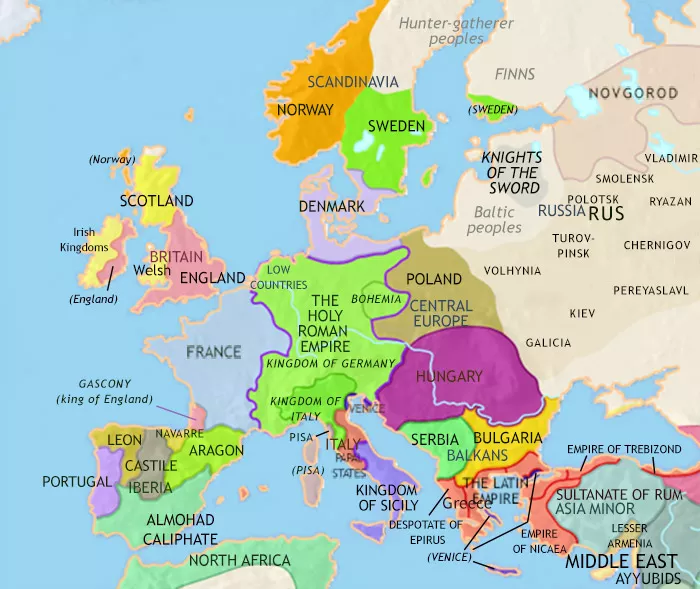
Gothic art developed in Western Europe during the twelfth century and continued into the sixteenth century in some regions. It emerged in a period when towns and cities were growing, trade was expanding, and cathedrals became important symbols of religious devotion, civic pride, and local identity.
The Gothic style first developed in France. One of its key early centers was the Abbey Church of Saint-Denis near Paris, where Abbot Suger sponsored a major rebuilding project in the twelfth century. Suger believed that the beauty and light of the church could help direct the mind toward God.
Gothic art developed from Romanesque traditions, but it introduced new architectural solutions that made buildings appear taller, lighter, and more open. Gothic architecture, sculpture, stained glass, and manuscript illumination all contributed to the visual experience of medieval Christianity.
Gothic Architecture
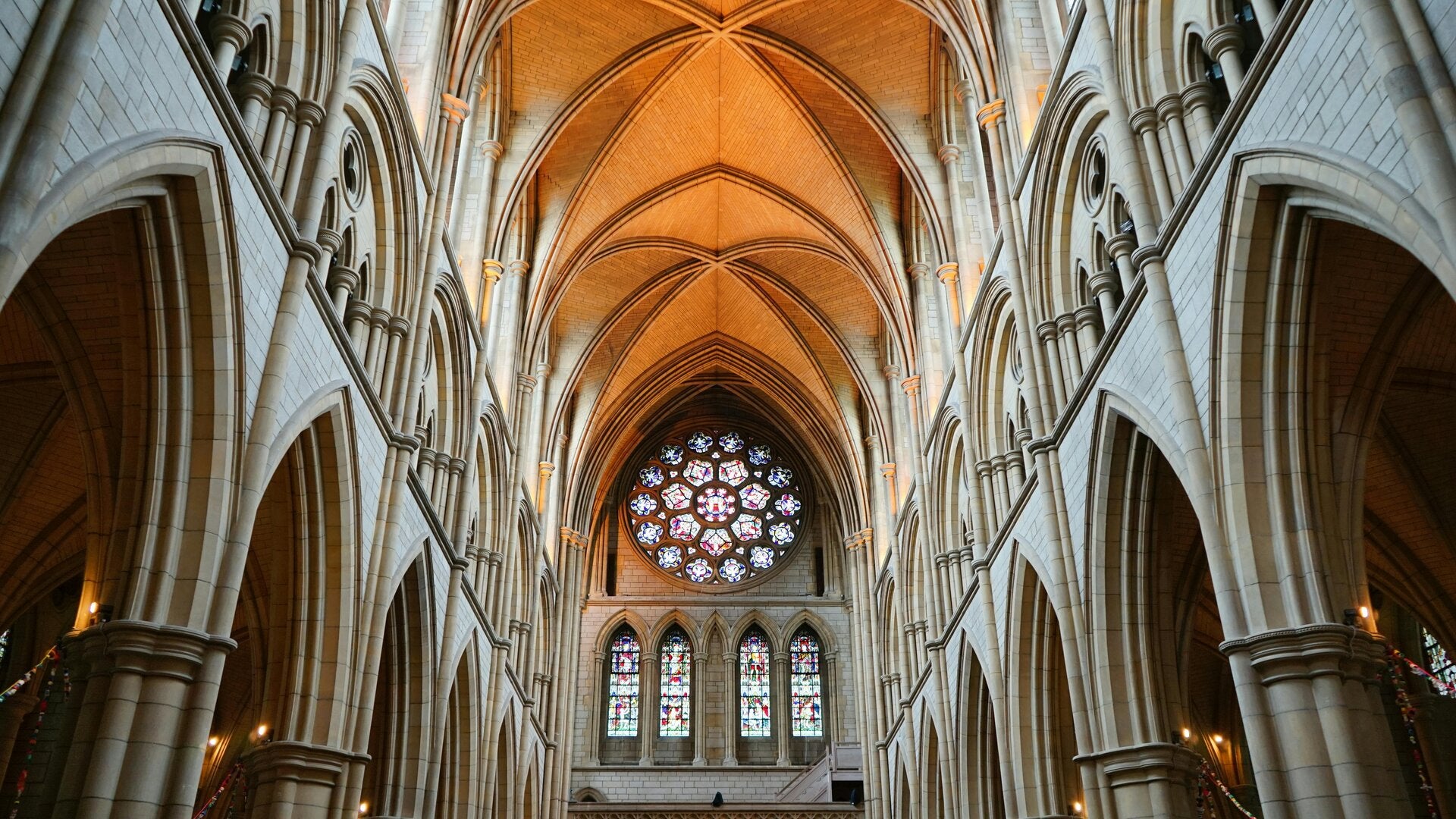
Gothic architecture is especially known for its height, pointed arches, ribbed vaults, and large windows. These features worked together to distribute the weight of the building and allow walls to be opened up for glass.
The main architectural features include:
-
Pointed arches, which can rise higher than rounded arches and help distribute structural forces.
-
Ribbed vaults, in which stone ribs form a supporting framework for the vault.
-
Flying buttresses, exterior supports that help transfer the outward thrust of the vaults away from the walls.
-
Large stained-glass windows, which fill interiors with colored light.
-
Vertical emphasis, making buildings appear to reach upward toward heaven.
Together, these innovations allowed Gothic cathedrals to have higher ceilings and larger windows than many Romanesque churches. Their interiors could feel more open and luminous.
The Abbey Church of Saint-Denis
The rebuilding of the Abbey Church of Saint-Denis, associated with Abbot Suger in the twelfth century, is an important early development in Gothic architecture.
Suger wanted the church to be a magnificent setting for Christian worship. The choir was designed to create a more unified space, with chapels connected by an ambulatory and windows that admitted colored light.
Saint-Denis helped establish architectural ideas that would become central to the Gothic style.
Chartres Cathedral
Chartres Cathedral in France is one of the most important examples of Gothic architecture. Rebuilt after a fire in 1194, it is known for its monumental scale, pointed arches, ribbed vaults, sculpted portals, and extensive stained glass.
The cathedral's windows tell biblical stories and depict saints and other religious figures. Their colors transform the interior and contribute to the spiritual atmosphere of the building.
Amiens Cathedral
Amiens Cathedral, begun in the thirteenth century, demonstrates the Gothic desire for height and openness. Its tall nave, pointed arches, and elaborate structural system create a strong vertical effect.
The building illustrates how Gothic architecture could combine complex engineering with a unified artistic design.

Gothic Sculpture
Gothic sculpture remained closely connected to church architecture, particularly around entrances and portals. However, figures gradually became more naturalistic than many Romanesque sculptures.
Sculptors increasingly showed figures with more convincing bodies, individualized faces, natural gestures, and a greater sense of movement. Figures might interact with one another or turn toward each other, making scenes feel less rigid.
Religious subjects remained central. Portals often included Christ, the Virgin Mary, saints, biblical figures, and scenes associated with salvation.
The Portals of Chartres Cathedral
The sculpted portals of Chartres Cathedral are important examples of early Gothic sculpture. The figures are integrated into the architecture, but they show a growing interest in individual appearance and more natural bodily forms.
The sculptures combine religious symbolism with a developing sense of human presence. They helped communicate Christian teachings to visitors entering the cathedral.

Stained Glass, Painting, and Manuscript Illumination
Stained Glass
Stained glass became one of the most distinctive forms of Gothic art. Artists assembled pieces of colored glass held together by strips of lead to create images and decorative patterns.
Gothic cathedrals used large windows to depict biblical narratives, saints, prophets, and other religious subjects. The images served an educational purpose, while the colored light created a distinctive spiritual atmosphere.
The windows of Chartres Cathedral are especially famous for their rich colors and extensive narrative scenes. Blue and red glass, along with carefully arranged figures and patterns, transforms the light entering the cathedral.
Stained glass was not simply decoration. It formed part of the overall architectural experience, connecting structure, image, and light.
Gothic Painting and Manuscript Illumination
Gothic painting developed alongside architecture and sculpture. Artists created wall paintings, panel paintings, and illuminated manuscripts. Religious subjects remained important, but figures increasingly displayed more natural gestures, emotional expression, and attention to clothing and detail.
Illuminated manuscripts continued to be produced in monasteries and workshops. Their decorated letters, miniature scenes, and detailed ornament brought biblical stories and religious texts to life.
Over time, Gothic artists showed a growing interest in the visible world. This development can be seen in the more individualized figures and increasingly detailed settings found in later medieval art.
Romanesque and Gothic Art: Main Differences
| Romanesque Art | Gothic Art |
|---|---|
| Rounded arches | Pointed arches |
| Thick walls and massive piers | More open walls supported by a structural system that includes flying buttresses |
| Relatively small windows | Large stained-glass windows |
| Heavy, solid appearance | Taller, lighter, more vertical appearance |
| Sculpture often strongly stylized | Sculpture increasingly naturalistic and expressive |
Both styles served Christian worship and communicated religious ideas. Gothic art developed from Romanesque traditions but used new structural solutions and visual approaches.
Key terms
- Rose window: A large circular stained glass window arranged with intricate stone tracery radiating from the center.
- Gothic – An artistic style that developed in Western Europe from the twelfth century onward.
- Pointed arch – An arch with a pointed top.
- Ribbed vault – A vault supported by a framework of stone ribs.
- Flying buttress – An exterior support that transfers the outward thrust of a building's vaults away from the walls.
- Stained glass – Colored glass assembled into windows, often forming images or patterns.
- Cathedral – The principal church of a bishop.
- Portal – A monumental doorway, often richly decorated with sculpture.
- Abbot – The head of a monastery.
- Ambulatory – A passage around the sanctuary or apse of a church.
Create Your Own Website With Webador