Etruscan art and funerary culture
Thriving in central Italy before the rise of Rome, the Etruscans developed a distinct visual culture centered on celebratory funerary customs, energetic terracotta sculpture, and lively tomb frescoes. Their architectural innovations and religious rituals formed the direct foundation for early Roman art.
Historical context
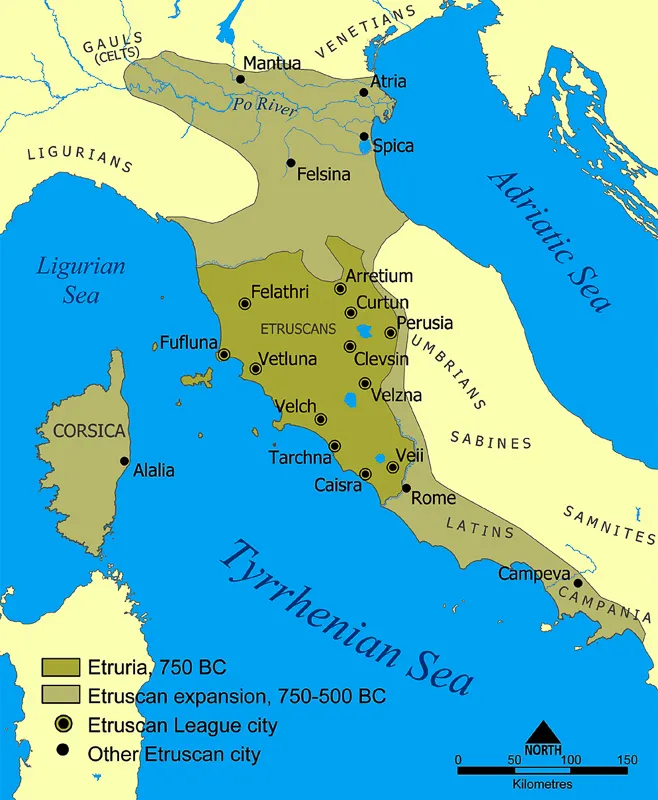
The Etruscans lived in central Italy, especially in the region known as Etruria, before Rome became the dominant power in the Italian peninsula. Their civilisation flourished from approximately the 8th to the 3rd century BCE. They developed wealthy cities, traded with other Mediterranean peoples, and came into contact with Greek culture.
Etruscan art was influenced by Greek art, particularly in sculpture and pottery decoration. However, the Etruscans developed their own artistic traditions. Their art is especially known for tombs, wall paintings, terracotta sculptures, and religious buildings.
The Etruscans placed great importance on funerary practices and beliefs about life after death. Their tombs often contained objects, paintings, and sculptures that provide information about their customs, social life, and ideas about the afterlife.
Etruscan Architecture and Tombs
Etruscan Temples
Very few Etruscan temples have survived because they were often built using wood, mud brick, and other materials that have not lasted well over time. Their appearance is known mainly through archaeological remains and later descriptions.
Etruscan temples usually stood on a high platform, or podium, and were approached from the front by a staircase. They often had a deep porch with columns and a relatively simple interior divided into rooms dedicated to different deities.
This arrangement differed from the more open, surrounding-column design commonly associated with Greek temples.
Etruscan Tombs
Etruscan tomb architecture is better preserved than their temples. Some tombs were built to resemble houses, while others were cut into rock or constructed underground.
Their interiors could contain chambers, furniture, objects, and wall paintings. These features created spaces associated with the dead and reflected Etruscan beliefs about life after death.
Tombs are particularly important sources of information about Etruscan art, religious beliefs, and social customs.
Etruscan Sculpture
Etruscan sculptors frequently worked in terracotta, a type of fired clay suitable for large sculptures and architectural decoration. Bronze was also used for statues and smaller objects.
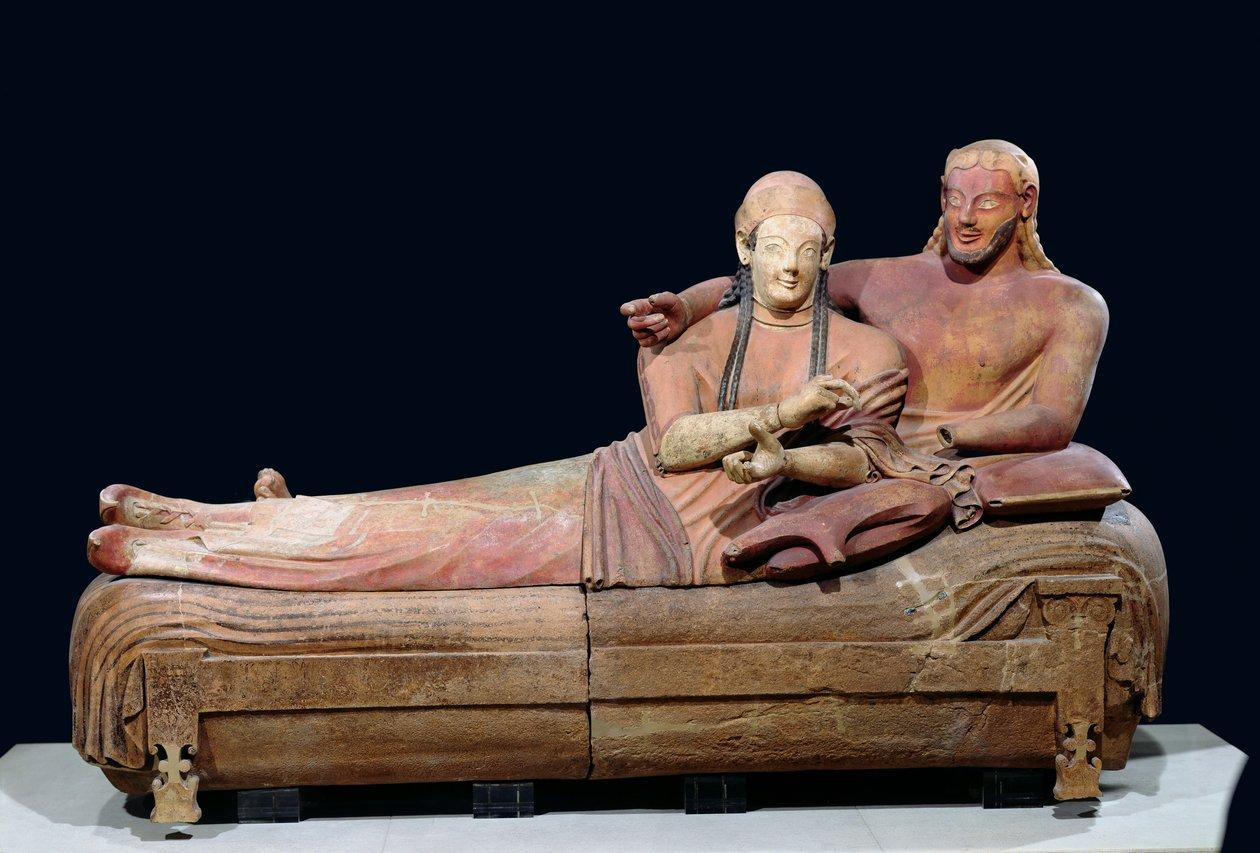
Sarcophagus of the Spouses
The Sarcophagus of the Spouses, made from terracotta around the late 6th century BCE, depicts a man and a woman reclining together on a couch, as if attending a banquet. Their upper bodies are upright, and their gestures suggest interaction with the viewer.
The sculpture presents the deceased as active participants in a social occasion rather than simply showing them lying down. Its expressive faces and stylised features reflect the importance of banquets and social status in Etruscan culture.
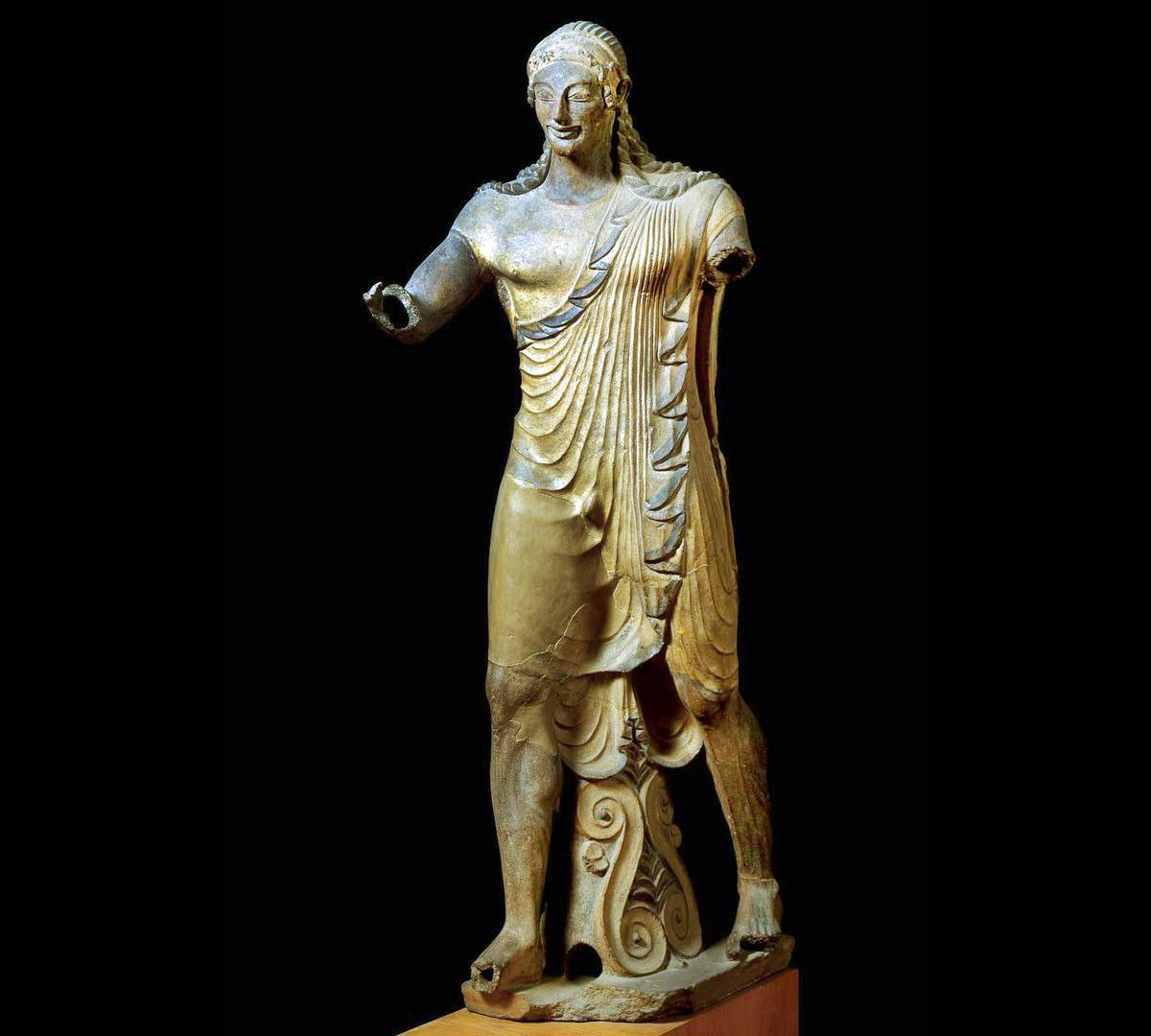
Apollo of Veii
The Apollo of Veii, a large painted terracotta statue dating to the late 6th century BCE, was part of the decoration of a temple at Veii.
The figure is shown in motion, with an animated face and strongly modelled drapery. Its energetic pose differs from the calm, balanced appearance often associated with Classical Greek sculpture.
Characteristics of Etruscan Sculpture
Etruscan sculpture combined influences from Greek art with distinctive local traditions. Movement, expressive gestures, and an emphasis on the human figure gave many Etruscan works a lively and individual character.
Etruscan Tomb Painting
Etruscan tomb paintings provide valuable evidence about everyday life, religious beliefs, and social customs. Many surviving examples come from the necropolis of Tarquinia, an important Etruscan centre.
The paintings often show banquets, musicians, dancers, athletes, animals, and outdoor activities. Figures are outlined clearly and painted in strong colours. Their gestures and movements create a lively impression.
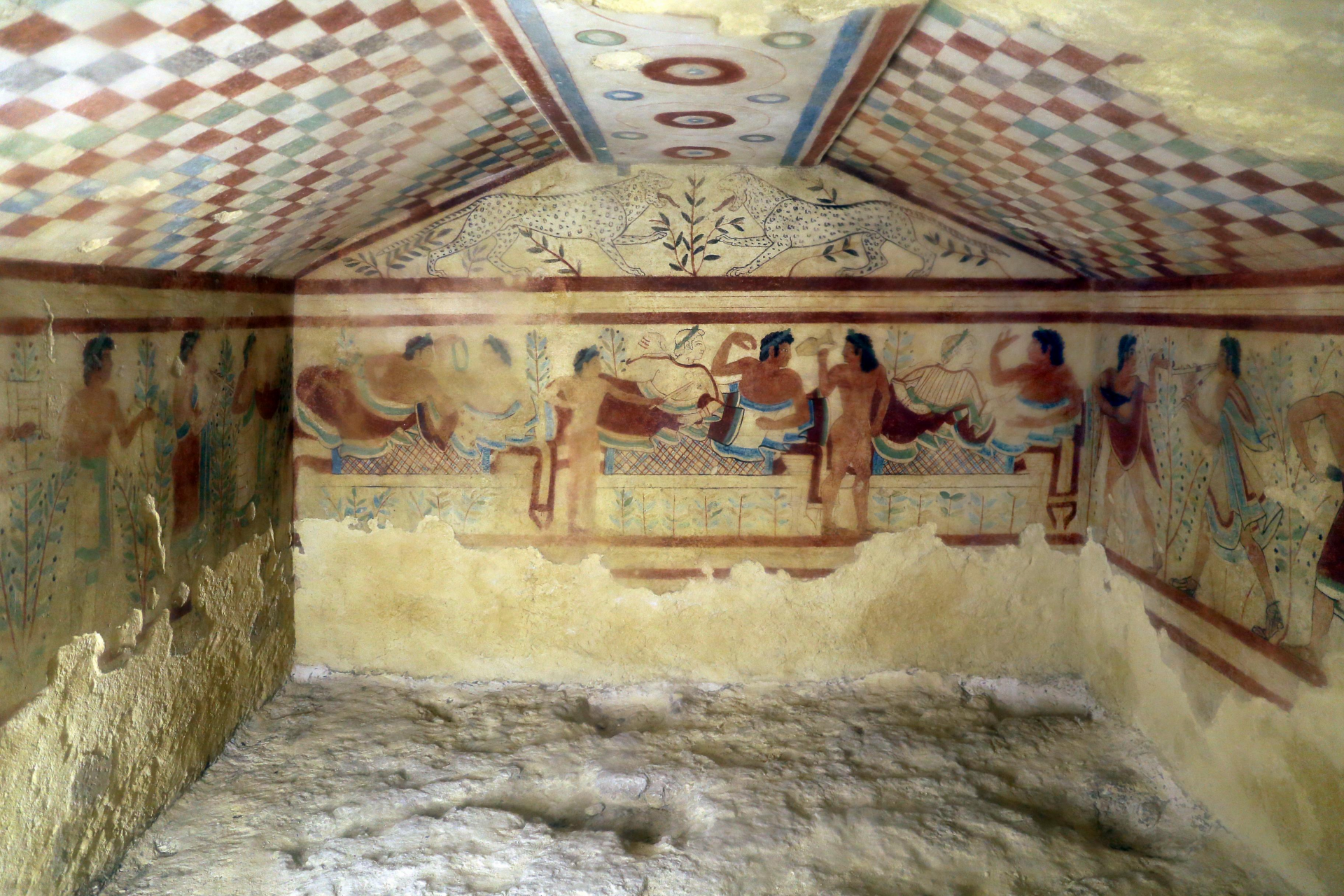
Tomb of the Leopards
The Tomb of the Leopards at Tarquinia, dating to the 5th century BCE, is a well-known example of Etruscan tomb painting. Its wall paintings show figures participating in a banquet, accompanied by musicians. Leopards appear in the upper part of the composition, giving the tomb its modern name.
These scenes suggest that the Etruscans associated the afterlife with activities, celebrations, and social relationships familiar from the world of the living.
Why Tomb Paintings Matter
Etruscan tomb paintings help us understand how people lived, celebrated, and remembered the dead. They reveal the importance of social gatherings and provide insight into Etruscan ideas about life after death.
Etruscan Art and the Rise of Rome
Etruscan art played an important role in the development of early Roman culture. Rome came into close contact with the Etruscans through trade, political relationships, and periods of Etruscan influence over the city.
The Romans adopted and adapted several Etruscan traditions, including aspects of temple architecture, religious practices, and the use of the arch. Etruscan artists and craftsmen also contributed to the artistic culture of early Rome.
Although Roman art later developed on a much larger scale, Etruscan traditions remained an important part of its early history.
Why Etruscan Art Matters
Etruscan art combines influences from Greek culture with distinctive local traditions. Their terracotta sculptures, decorated tombs, and lively wall paintings reveal the importance of funerary beliefs and social life.
Studying Etruscan art also helps us understand the cultural influences that shaped early Rome and contributed to the development of Roman art.

Refresh your memory
- Etruscans – An ancient people who lived mainly in central Italy before Rome became dominant.
- Terracotta – Clay that has been shaped and fired to become hard.
- Necropolis – A large cemetery or burial ground.
- Sarcophagus – A container used for a coffin or burial.
- Podium – A raised platform on which a building, such as a temple, stands.
- Tomb painting – Painting used to decorate a burial chamber, often showing banquets, musicians, and other activities.
Knowledge check: Etruscan art
Test your mastery of Etruscan funerary traditions, architectural developments, and sculptural styles. Click each question below to reveal the answer.
Create Your Own Website With Webador