Romanesque art
Historical context
Romanesque art developed in Western Europe mainly during the eleventh and twelfth centuries. During this period, Christianity shaped everyday life, and monasteries and churches were important religious and cultural centers.
Pilgrimages to sacred places became increasingly important. Large numbers of people traveled to visit the relics of saints, and churches had to accommodate pilgrims as well as local congregations. Monastic communities also commissioned buildings and works of art for worship.
The term Romanesque means “Roman-like.” It was applied to this style because its architecture used features associated with Roman building, especially rounded arches, massive walls, and stone vaults. Romanesque art was not identical throughout Europe, but many buildings shared similar structural and decorative features.
Romanesque Architecture
Main Characteristics
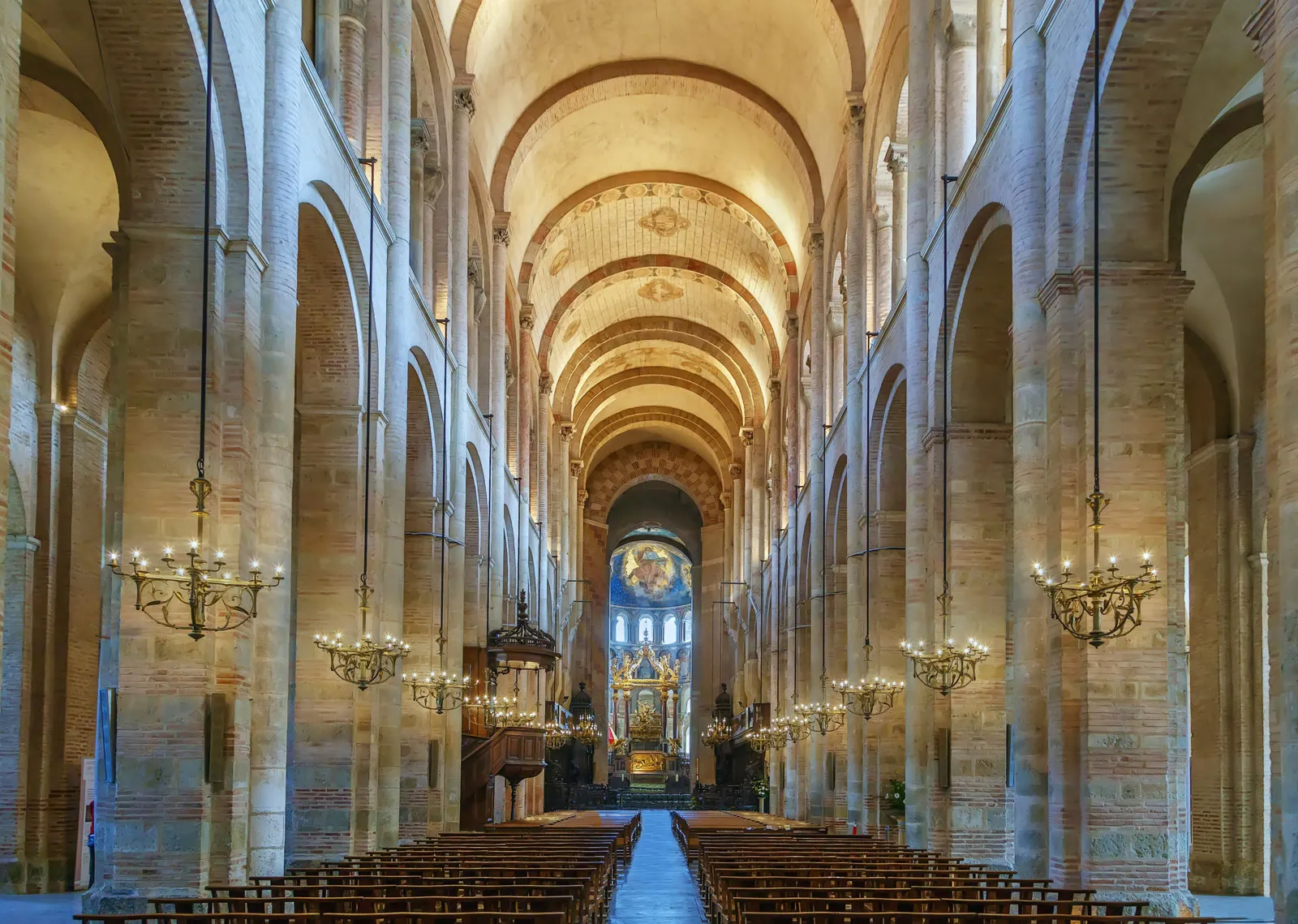
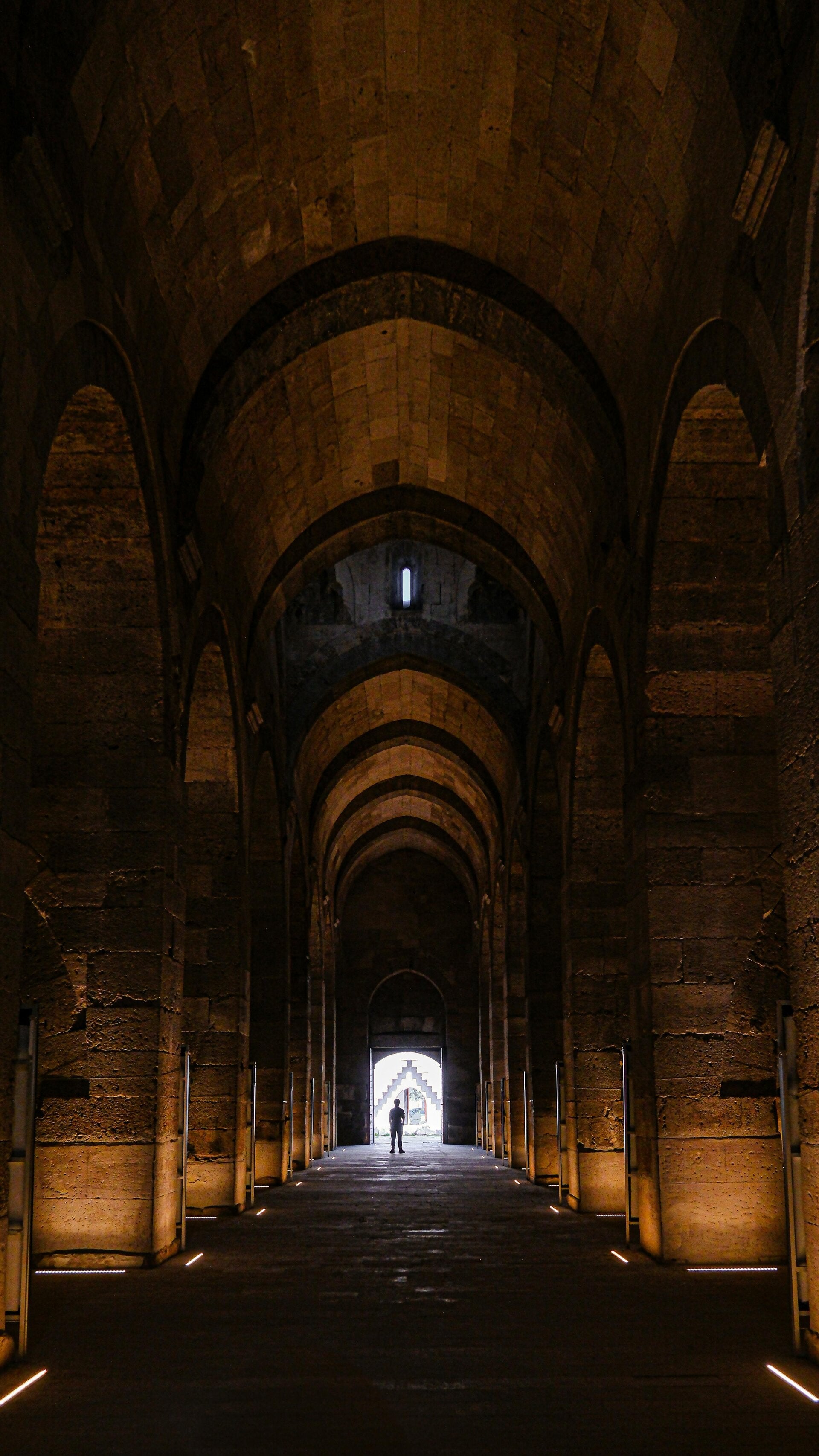
Romanesque churches were generally solid and monumental. Their thick stone walls, sturdy piers, and relatively small windows gave many interiors a heavy, enclosed appearance.
Important architectural features included:
-
Rounded arches, inspired in part by Roman architecture.
-
Barrel vaults, formed by extending a semicircular arch along a length.
-
Groin vaults, created where two barrel vaults intersect.
-
Thick walls and massive piers, needed to support the weight of stone vaults.
-
Small windows, which often allowed less light into the interior than later Gothic churches.
-
Towers and sculpted portals, which gave churches a monumental exterior and communicated religious messages.
The plan of many pilgrimage churches included a long nave, side aisles, a transept, and an apse. Some churches also had an ambulatory, a passage around the sanctuary, with radiating chapels that allowed pilgrims to move around the church and visit relics without interrupting services.
Pilgrimage Churches
Pilgrimage churches were designed to manage large numbers of visitors. Their layout helped pilgrims circulate through the building, while chapels provided additional spaces for devotion.
An important example is Saint-Sernin in Toulouse, France. Its large scale and carefully organized plan illustrate the needs of a major pilgrimage church.
Romanesque churches were not only places of worship. Their architecture also expressed the stability and authority of the Church during the medieval period.

Romanesque Sculpture
Sculpture and Church Architecture
Romanesque sculpture was closely connected to architecture. Sculpted figures and scenes decorated portals, capitals, and other parts of churches. These images helped communicate Christian teachings to people who might not be able to read.
Sculptors often used elongated figures, expressive gestures, and dramatic compositions. The figures were not always represented with naturalistic proportions. Their arrangement and appearance served the religious meaning of the scene.
The Tympanum
The tympanum is the semicircular or pointed surface above a doorway, often enclosed by an arch. Romanesque tympana could contain complex religious scenes, especially images of Christ as judge at the Last Judgment.
One famous example is the Last Judgment tympanum at the Cathedral of Saint-Lazare in Autun, France. It is associated with the sculptor Gislebertus and shows Christ presiding over the judgment of souls. The figures and gestures communicate the seriousness of salvation and the consequences of human actions.
Such sculptural programs transformed church entrances into visual lessons about Christian belief.
Romanesque Painting
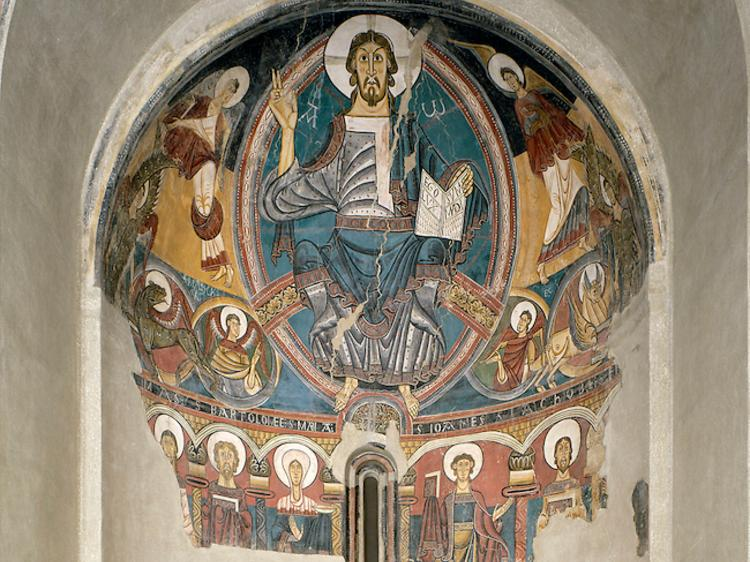
Romanesque churches were often decorated with wall paintings and, in some regions, mosaics. These images depicted biblical narratives, Christ, the Virgin Mary, saints, and scenes connected with salvation.
Painting was usually organized to fit the architecture. Figures could be arranged in clear registers or placed within defined spaces on walls and vaults. Strong outlines, simplified forms, and expressive gestures helped make the images readable from a distance.
An important example is the painted image of Christ in Majesty in the church of Sant Climent de Taüll in Catalonia, Spain. Christ is shown frontally and surrounded by symbols associated with the Evangelists. The composition emphasizes his divine authority rather than ordinary human appearance.
Like Romanesque sculpture, painting served a religious and educational purpose. It helped communicate stories and beliefs to churchgoers.
Key terms
- Romanesque – An artistic style of medieval Western Europe, especially associated with the eleventh and twelfth centuries.
- Rounded arch – An arch with a semicircular curve.
- Barrel vault – A continuous semicircular vault formed by extending an arch along a length.
- Groin vault – A vault formed by the intersection of two barrel vaults.
- Nave – The central space of a church.
- Transept – The part of a church that crosses the nave, often creating a cross-shaped plan.
- Ambulatory – A passage around the sanctuary or apse.
- Relic – A physical object associated with a saint or a sacred event.
- Tympanum – The decorated surface above a church doorway.
- Last Judgment – The Christian belief that Christ will judge humanity at the end of time.
- Pilgrimage church: A monumental basilica engineered with ambulatory aisles and radiating chapels to accommodate crowds of travelers venerating sacred relics.
Create Your Own Website With Webador