The cultures of Aegean art
Historical context
During the Bronze Age, several important cultures developed around the Aegean Sea, between the Greek mainland, the islands, and the island of Crete. These cultures traded with other Mediterranean societies and developed distinctive forms of architecture, sculpture, pottery, and painting.
Aegean art developed before the rise of Classical Greek art. Although these cultures influenced the later Greek world, they had their own artistic traditions. Three main cultures are important: the Minoan and Mycenaean civilisations flourished during the Bronze Age, while Cycladic figurines are especially known from the earlier part of this period.


Cycladic civilization
Thriving in the Aegean archipelago during the early Bronze Age, renowned for abstract geometric marble idols crafted with striking simplicity and funerary significance.

Minoan civilization
Centered on Crete, famous for sprawling unfortified palace complexes, dynamic naturalistic frescoes, and sophisticated marine pottery reflecting a peaceful seafaring empire.

Mycenaean civilization
A warrior society on mainland Greece defined by monumental cyclopean fortifications, beehive tombs, and martial iconography celebrating power and epic prestige.
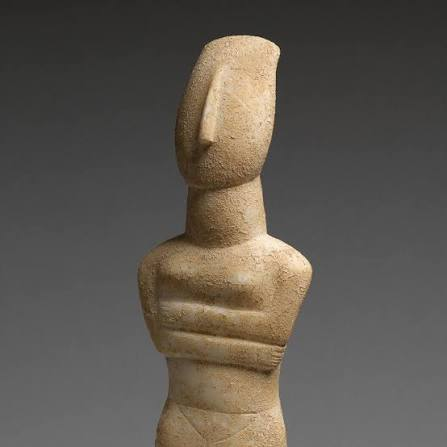
Cycladic art
The Cyclades are a group of islands in the Aegean Sea. Cycladic artists are especially known for small marble figurines, many of which represent the human body.
Marble Figurines
Most famous Cycladic figurines represent standing female figures. They usually have folded arms, a long nose, and a simplified body. Their forms are geometric and symmetrical, with very little detail.
Many figurines were found in graves, although their exact meaning and purpose are not fully understood. They may have had religious or funerary significance.
Cycladic sculpture is important because it reduces the human figure to a small number of clear shapes. These works can remind modern viewers of abstract sculpture, although they were created thousands of years before modern art.

Minoan art
Minoan civilisation developed on Crete and reached its height during the second millennium BCE. Crete's position in the Mediterranean encouraged trade and cultural exchange.
Minoan art is known for its colourful wall paintings, decorated pottery, and palace complexes. Compared with the monumental and defensive architecture of the Mycenaeans, Minoan palaces often appear more open and closely connected to their surroundings.
The Palace of Knossos
The Palace of Knossos was a major centre of Minoan civilisation. It contained courtyards, rooms, storage areas, staircases, and decorated walls. The complex was not simply a royal residence; it also served administrative, economic, and ceremonial functions.
Minoan palace walls were decorated with colourful frescoes. These paintings show people, animals, plants, and ceremonial activities.
Frescoes and Nature
Minoan artists often represented movement and the natural world. Their figures appear active rather than rigid, and the compositions use flowing lines and bright colours.
One well-known example is the Bull-Leaping Fresco from Knossos. It shows figures performing an acrobatic movement over a bull. The exact meaning of the scene is uncertain, but it suggests that the bull had an important role in Minoan culture.
Minoan Pottery
Minoan pottery was decorated with marine life, plants, and flowing patterns. These motifs reflect the importance of the sea and the natural environment in Minoan life.
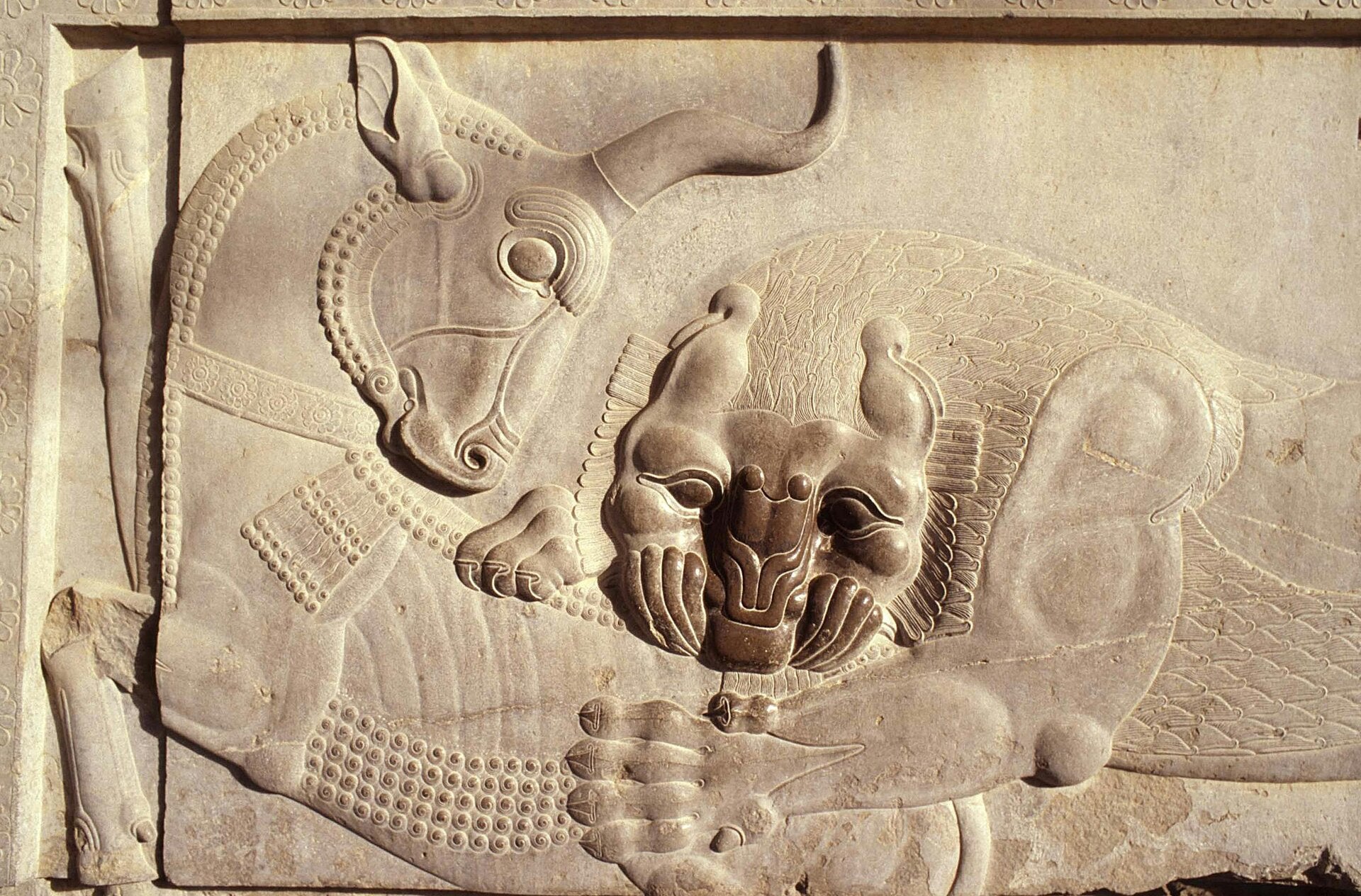
Mycenaean art
Mycenaean civilisation developed on the Greek mainland and became especially powerful during the later Bronze Age. Mycenaean centres included Mycenae and Tiryns.
Mycenaean architecture often had a more defensive character than Minoan architecture. Powerful rulers lived in fortified citadels surrounded by massive stone walls.
The Lion Gate at Mycenae
The Lion Gate is the monumental entrance to the citadel of Mycenae. Above the doorway is a triangular relief showing two lions standing on either side of a column.
The relief is an example of monumental sculpture integrated into architecture. The lions may symbolise protection and royal power, although their exact meaning is uncertain.
The enormous stone blocks used in Mycenaean fortifications led later Greeks to associate them with the mythical Cyclopes. This is why the construction technique is often called Cyclopean masonry.
Tombs and Funerary Architecture
Mycenaean rulers were buried in elaborate tombs. One famous example is the Treasury of Atreus, a large beehive-shaped tomb near Mycenae.
The tomb has a long entrance passage and a circular chamber covered by a high corbelled vault. Its monumental scale demonstrates the resources and authority of Mycenaean rulers.
Despite its traditional name, it is not certain that the tomb belonged to the legendary Atreus.
Mycenaean artists also produced decorated pottery, metal objects, and other luxury goods. Their art sometimes shows similarities to Minoan art, reflecting contact between the two cultures.
Key artworks to know
1. Cycladic Marble Figurines
Cycladic culture
Simplified marble figures, usually representing standing female forms. Their folded arms, geometric shapes, and minimal details are characteristic of Cycladic sculpture.
2. Palace of Knossos
Minoan culture
A major palace complex on Crete that served administrative, economic, and ceremonial functions. Its decorated walls and courtyards reflect the importance of palace life in Minoan civilisation.
4. Minoan Marine-Style Pottery
Minoan culture
Pottery decorated with sea creatures and flowing natural forms, reflecting the importance of the sea in Minoan life.
5. Lion Gate at Mycenae
Mycenaean culture
The monumental entrance to the citadel of Mycenae, decorated with a relief of two lions standing beside a column.
6. Treasury of Atreus
Mycenaean culture
A monumental beehive-shaped tomb near Mycenae, featuring a long entrance passage and a circular chamber covered by a corbelled vault.
Key terms and highlights
Aegean
The sea between the Greek mainland and the western coast of Asia Minor, including many islands.
Bronze Age
A period when bronze became an important material for tools, weapons, and objects.
Palace Complex
A group of connected buildings used for administration, storage, ceremonies, and possibly royal residence.
Fresco
A wall painting made on fresh plaster.
Citadel
A fortified centre of a city, often built on elevated ground.
Cyclopean Masonry
Construction using very large stone blocks, associated with Mycenaean fortifications.
Corbelled Vault
A roof-like structure formed by placing each layer of stone slightly inward from the one below it.
Create Your Own Website With Webador