Realism and impressionism
Historical context
During the nineteenth century, Europe experienced major social and technological changes. Industrialization transformed cities and working life, while railways, urban growth, and new forms of entertainment changed how people experienced the modern world. Photography also became increasingly important, raising new questions about the purpose of painting.
Earlier academic art often favored subjects from history, mythology, and religion, as well as idealized figures. Many artists of the nineteenth century began to turn their attention to contemporary life, ordinary people, and the world they could observe around them.
The official Paris Salon remained an important institution for artists, but its jury often rejected works that challenged established artistic conventions. In 1863, the Salon des Refusés was organized to exhibit works rejected by the official Salon. It brought public attention to disagreements about artistic standards and helped challenge the authority of traditional art institutions.
Realism developed in the mid-nineteenth century and emphasized the representation of contemporary life without idealizing it. Impressionism, which emerged later in the century, explored the effects of light, color, atmosphere, and the changing appearance of a scene.
Both movements helped transform modern art, but they approached the visible world in different ways.


Realism
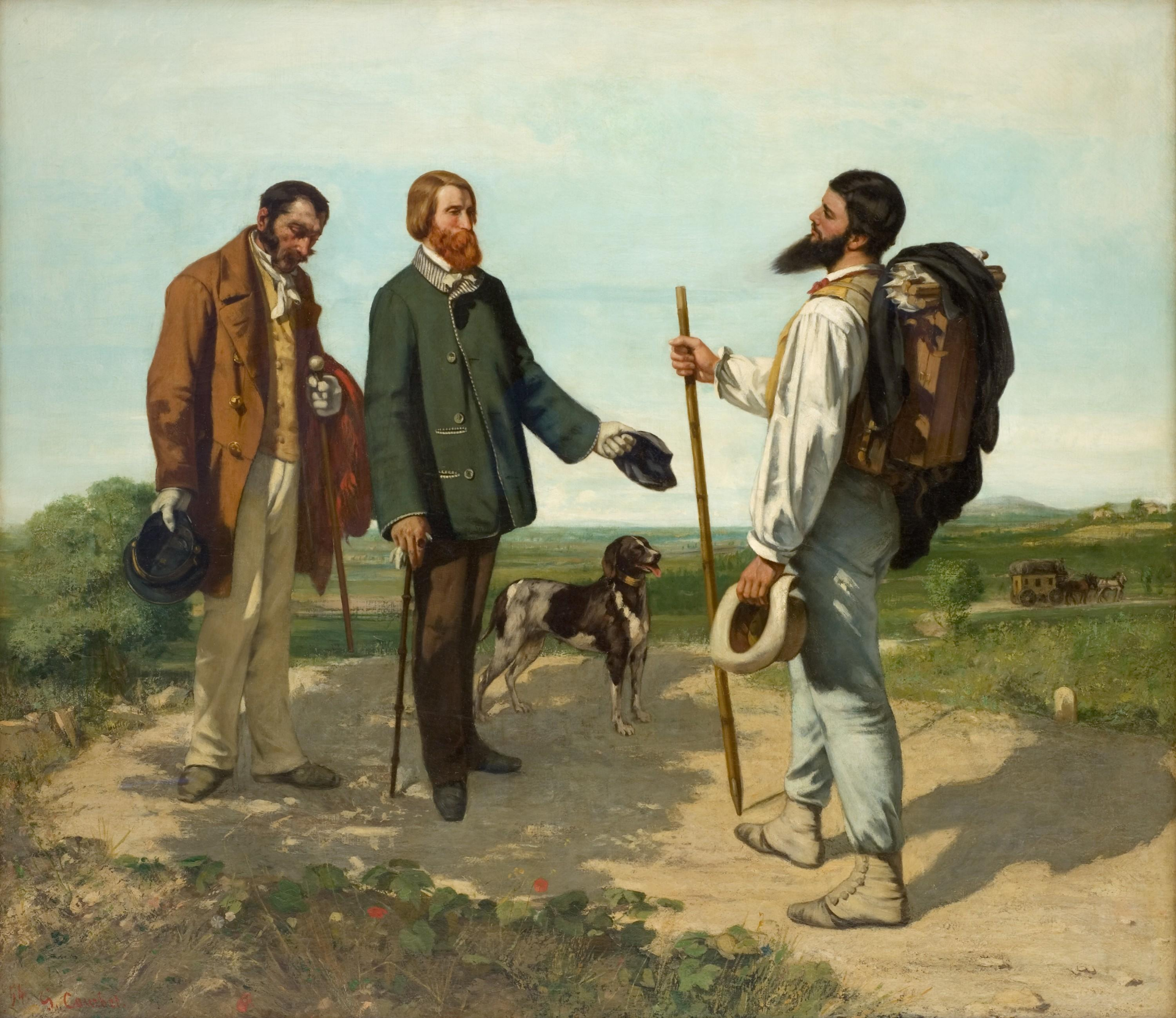
Realism developed mainly in France during the 1840s and 1850s. Realist artists wanted to represent the world of their own time, including ordinary people, rural labor, urban life, and social conditions.
Instead of presenting idealized heroes or dramatic scenes from the distant past, they often depicted people engaged in everyday activities. Workers and peasants could be shown on a large scale, in a manner traditionally reserved for important historical subjects.
Main characteristics of Realism include:
- Contemporary subjects and ordinary people.
- Interest in workers, peasants, and everyday life.
- Observation of the visible world rather than idealization.
- A direct and often unembellished presentation of people and events.
- Attention to social conditions and class differences.
- Rejection of the idea that only heroic, mythological, or religious subjects were suitable for serious art.
Realism did not mean that artists simply copied reality mechanically. Artists still made decisions about composition, color, and emphasis. Their aim was to make contemporary life a legitimate subject of art.
Gustave Courbet
Gustave Courbet was one of the leading figures of Realism. He rejected idealized academic conventions and focused on the people and circumstances of his own time.
The Stone Breakers (1849)
In this painting, two laborers break stones by hand, performing exhausting physical work. Courbet does not present them as heroic figures or idealized peasants. Their worn clothing, bent bodies, and repetitive task emphasize the difficult reality of manual labor.
The painting made ordinary workers the central subject of a large-scale artwork. It challenged traditional expectations about what deserved to be represented in serious painting. The original painting was destroyed during the Second World War.
A Burial at Ornans (1849–1850)
This large painting depicts a funeral in Courbet’s hometown of Ornans. The people attending the burial are shown as ordinary members of the local community, rather than as idealized figures in a religious or historical scene.
Courbet gives the gathering a monumental scale, traditionally associated with grand historical paintings. The figures are arranged across the canvas, with no single individual presented as a heroic protagonist.
The work demonstrates how Realism challenged the hierarchy of artistic subjects by treating an ordinary local event as worthy of a major painting.
Jean-François Millet
Jean-François Millet was a French painter known for his depictions of rural life and agricultural labor. His paintings often focus on the physical work and daily routines of peasants.
The Gleaners (1857)
The painting depicts three women collecting leftover stalks of grain after the harvest. Their repeated bending movements emphasize the physical nature of their work.
Millet presents the women with dignity, but he does not hide the hard conditions of rural labor. The contrast between the women in the foreground and the abundant harvest in the background also draws attention to social and economic differences.
The painting is an important example of Realism because it gives ordinary workers a central place in art.
Édouard Manet: A Transition Toward Modern Art
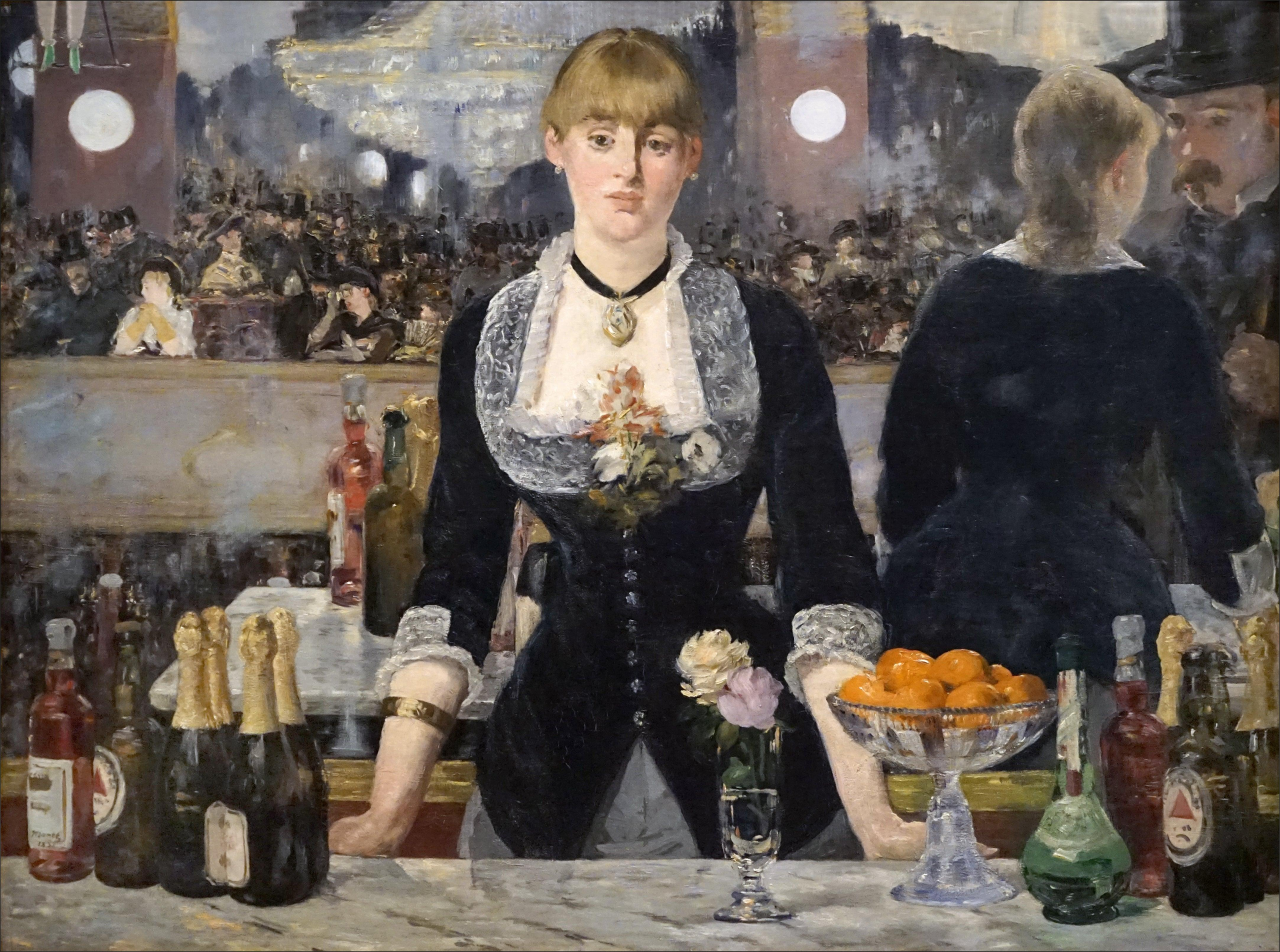
Édouard Manet was influenced by Realism and helped prepare the way for modern art. He painted contemporary people and modern urban life while challenging the conventions of academic painting.
His painting The Luncheon on the Grass (1863) shows two fully dressed men sitting outdoors with a nude woman, while another woman bathes in the background. The contemporary setting, the woman's direct gaze, and Manet's unconventional composition challenged traditional expectations about painting.
The painting was rejected by the official Paris Salon in 1863 and exhibited at the Salon des Refusés, an exhibition organized for works rejected by the Salon's jury. The exhibition attracted public attention and allowed viewers to see works that challenged established artistic standards.
Manet's bold compositions and unconventional approach helped prepare the way for modern art. Although he influenced the Impressionists, he did not participate in their group exhibitions.
Impressionism
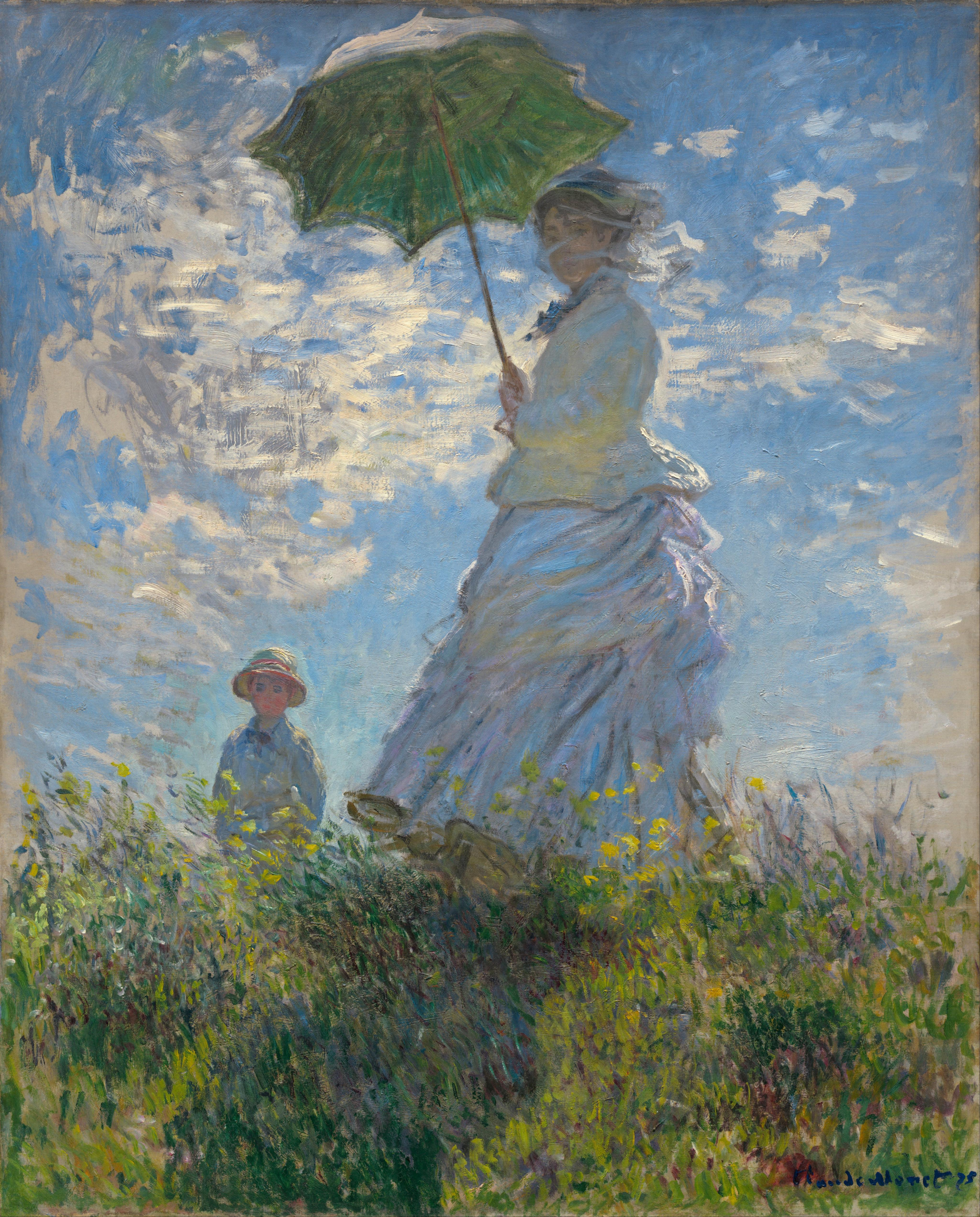
Impressionism developed in France during the 1860s and 1870s. Impressionist artists wanted to capture the changing effects of light, color, and atmosphere rather than represent every detail of a scene precisely.
They often painted contemporary life, including city streets, cafés, theaters, gardens, rivers, and leisure activities. Instead of carefully finishing every detail in the studio, they used visible brushstrokes and fresh colors to capture a moment as they experienced it.
Many Impressionists practiced plein-air painting, which means painting outdoors. Working outside allowed them to observe how natural light changed throughout the day and how it affected the colors and appearance of objects.
Impressionists often placed small strokes of different colors next to one another instead of blending every color smoothly on the palette. This helped create the impression of changing light and movement. Their work was influenced by new ways of thinking about color and visual perception, although not every Impressionist followed the same methods.
Claude Monet (1840–1926)
Claude Monet was one of the leading figures of Impressionism. He was especially interested in the way light and atmosphere changed the appearance of the same subject.
In Impression, Sunrise (1872), Monet depicted the port of Le Havre at sunrise. The painting uses loose brushstrokes, muted colors, and a bright orange sun to capture a fleeting impression of the scene rather than precise details.
The painting was shown at the first independent Impressionist exhibition in 1874. Art critic Louis Leroy used the word Impression mockingly in his review, and the term eventually became the name of the movement.
Monet also painted series of the same subject under different lighting and weather conditions. His Haystacks series and Rouen Cathedral series show how the appearance of a subject changes with the time of day, the season, and the atmosphere.
Pierre-Auguste Renoir (1841–1919)
Pierre-Auguste Renoir often painted people enjoying modern social life. His works show gatherings, cafés, dances, and outdoor leisure activities.
In Luncheon of the Boating Party (1880–1881), Renoir depicted a group of friends socializing on a balcony overlooking the Seine. The painting combines portraits of contemporary people with warm colors, natural light, and an informal atmosphere. It reflects the growing importance of leisure and social life in modern France.
Edgar Degas (1834–1917)
Edgar Degas was interested in movement, the human body, and scenes from modern urban life. He frequently depicted ballet dancers, musicians, and people at work or during leisure activities.
In The Dance Class (c. 1874), Degas shows ballet dancers rehearsing under the supervision of their instructor. The unusual viewpoint and seemingly informal arrangement of the figures make the scene look like a moment observed in real life.
Unlike many Impressionists, Degas often worked indoors and relied on drawings, sketches, and careful studio preparation. His work nevertheless shares the movement's interest in contemporary life, unusual compositions, and the effects of observation.
Realism and Impressionism: Main Differences
| Realism | Impressionism |
|---|---|
| Main focus is on ordinary people, work, and social conditions | Light, color, atmosphere, and fleeting moments |
| Common subjects are workers, peasants, funerals, and everyday life | Landscapes, city scenes, cafés, gardens, and leisure activities |
| Shows contemporary life without idealizing it | Captures the changing visual impression of a scene |
| Brushwork is often more solid and detailed, depending on the artist | Often loose, visible, and expressive |
| Light and color used to represent people and surroundings realistically | Used to show changing light, atmosphere, and color effects |
| Often worked from direct observation, frequently in the studio | Many artists painted outdoors (plein-air painting) |
| Some of the famous artists are Gustave Courbet, Jean-François Millet, Édouard Manet | Claude Monet, Pierre-Auguste Renoir, Edgar Degas |
Realism and Impressionism both developed in nineteenth-century France, and both challenged the traditions of academic art. However, they had different goals and approaches to representing the visible world.
Realism expanded the range of subjects considered worthy of serious art. It showed that ordinary people, working conditions, and everyday events could be as important as historical, mythological, or religious subjects.
Impressionism changed the way artists represented the visible world. Instead of concentrating on precise details and clearly defined forms, Impressionists explored how light, color, and atmosphere influence what we see.
Both movements helped weaken the dominance of academic traditions and opened new possibilities for modern art.
Remember: Realism focused on representing contemporary life without idealization, while Impressionism focused on capturing the changing appearance of the world through light, color, and atmosphere.
Key terms
-
Realism: An art movement that represented contemporary life and ordinary people without idealization.
-
Impressionism: An art movement that explored the effects of light, color, and atmosphere on the appearance of a scene.
-
Industrialization: The development of industries and factories that transformed work, cities, and society.
-
Modern life: Contemporary urban and social experiences, including work, transportation, entertainment, and leisure.
-
Brushstroke: A mark made by a brush when applying paint to a surface.
-
Atmosphere: The overall feeling or visual effect of a scene, often influenced by light, weather, and color.
-
Salon: An official art exhibition in France where artists presented their work to the public and critics.
-
Salon des Refusés: An exhibition held in Paris in 1863 for artworks rejected by the official Salon.
-
Plein-air painting: The practice of painting outdoors, directly observing nature and changing light.
Knowledge review and questions
Test your understanding of the revolutionary shift from academic realism to impressionist light. Click on each question to reveal the detailed answer.
Create Your Own Website With Webador